
At Newcastle Plunge Pools, we design and install plunge pools that suit your space, lifestyle, and budget. Our team takes care of everything, like the design, council papers, installation, and final checks. We keep the whole job simple and stress-free.
This guide shows you the costs, steps, timelines, and options so you can plan your pool with confidence.
What Is a Plunge Pool?
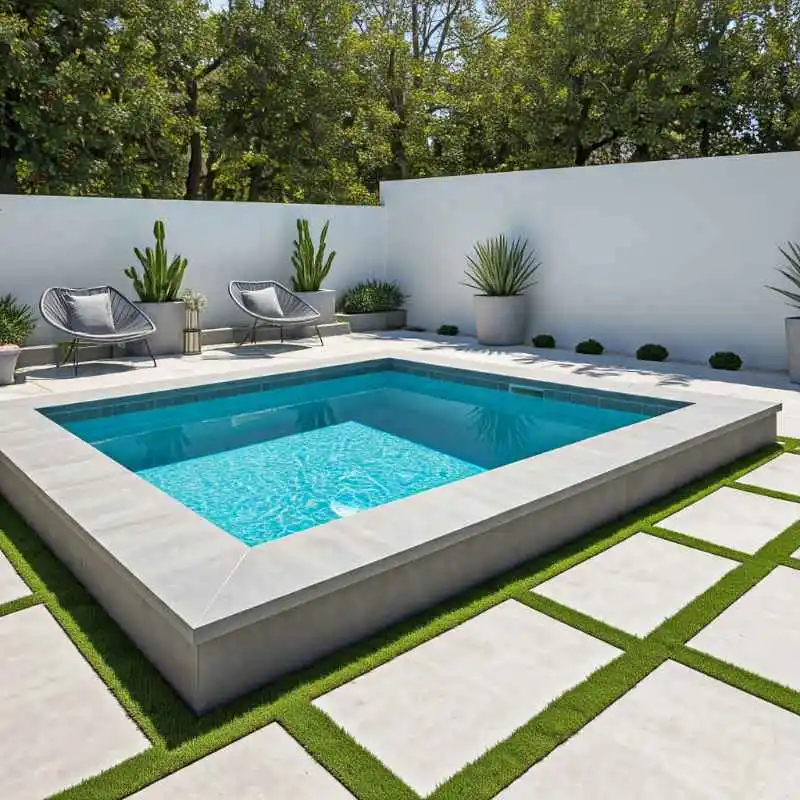
A plunge pool is a small pool made for relaxing, cooling off, or simple hydrotherapy. Most plunge pools are 2–7 metres long, 2–4 metres wide, and 1.2–1.8 metres deep. They use less water and are easier to clean than large swimming pools, which is why many Newcastle homeowners choose them for compact backyards.
A plunge pool is a small body of water, but it works in a big way. It gives you a place to cool down, relax, and let your muscles rest. Most plunge pools stay between 2–7 metres long, 2-4 metres wide, and 1.2-1.8 metres deep, which makes them strong choices for compact Newcastle backyards.
In science, we often learn that small things can have a big effect. A plunge pool works the same way. Even though it uses less water and takes up less space, it can change how you enjoy your home. It is simple to look after, warms up faster, and needs less energy than a large swimming pool.
Homeowners can choose from fibreglass plunge pools, precast concrete plunge pools, or custom concrete plunge pools, each with its own strengths. These materials change how the pool feels, how long it lasts, and how much it costs. Many people in Newcastle pick plunge pools for cold-plunge recovery, summer cooling, and easy maintenance, because they want comfort without the work of a full-size pool.
In the same way the universe shows us that space is precious, a plunge pool helps you make the most of your own space at home. It turns even a small yard into a calm retreat where you can rest and recharge.
What Are the Benefits of a Plunge Pool for Newcastle Homes
Top 5 Benefits of a Plunge Pool in Newcastle:
- Fits compact backyards easily.
- Uses less energy and water.
- Quick to cool off during summer.
- Easier cleaning and lower maintenance.
- Great for relaxation and hydrotherapy.
Plunge pools are a great fit for Newcastle because they work well in the city’s warm climate and smaller block sizes. Many homeowners want a pool that feels relaxing without the big cost of a full-size swimming pool, and a plunge pool makes that possible.
A plunge pool fits easily into small backyards, courtyards, and tight urban spaces. Even homes with tricky layouts or narrow backyards can fit a compact plunge pool. Because the pool holds less water, it cools down fast in summer, heats up quicker in winter, and keeps power use low. This makes it easier and cheaper to run all year.
A plunge pool also uses less water than a large pool, which means fewer chemicals, easier cleaning, and less time spent on maintenance. Many families in Newcastle choose plunge pools because they want low-maintenance backyard upgrades without giving up comfort.
Plunge pools are also great for relaxation, hydrotherapy, and cold-plunge recovery. The deeper design gives you space to stretch, float, or sit while cooling your body after work, workouts, or hot weather. This makes it popular for people who want both a lifestyle pool and a wellness feature in one compact design.
When you combine the small size, low running costs, and ability to handle Newcastle’s warm coastal weather, a plunge pool becomes one of the most practical backyard upgrades you can choose.
Common Materials Used in Plunge Pools
Homeowners can choose from fibreglass, precast concrete, or custom concrete plunge pools, depending on design needs and budget.
Fibreglass Plunge Pools
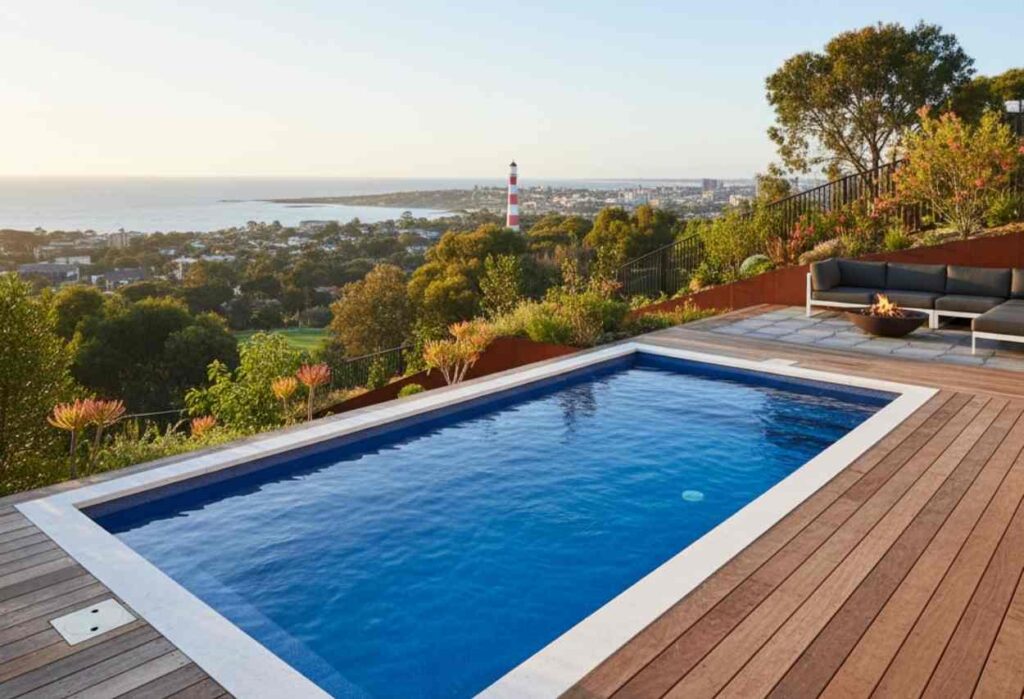
These are pre-moulded and arrive ready to install. They come in set shapes and sizes, offering a smooth finish and fast installation. Fibreglass pools are durable, affordable, and require minimal upkeep.
Precast Concrete Plunge Pools
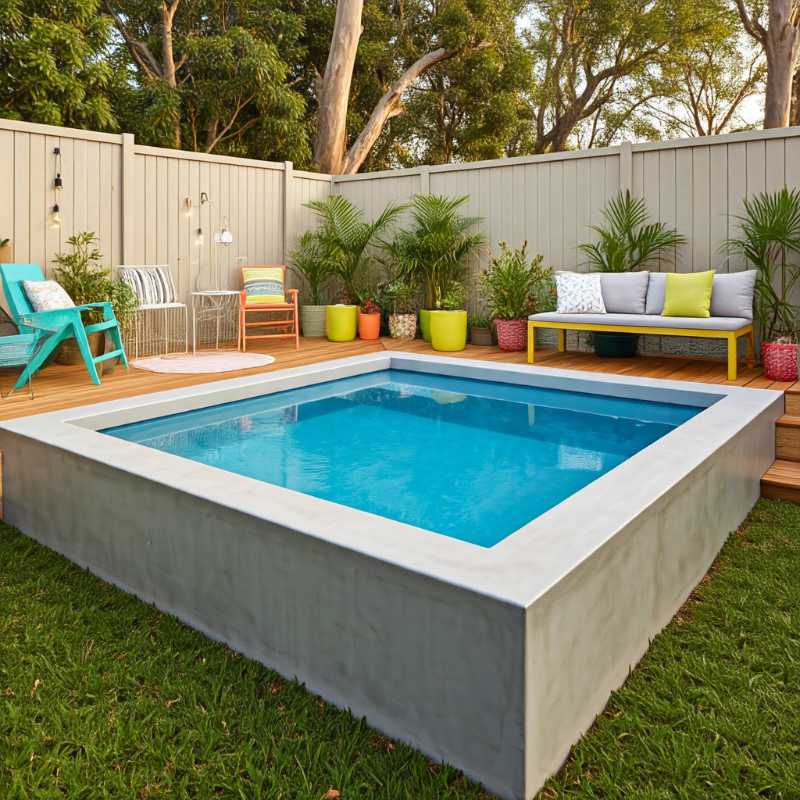
Precast concrete models are built off-site and craned into your backyard. They provide excellent strength and insulation while maintaining a modern, clean look.
Custom Concrete Plunge Pools
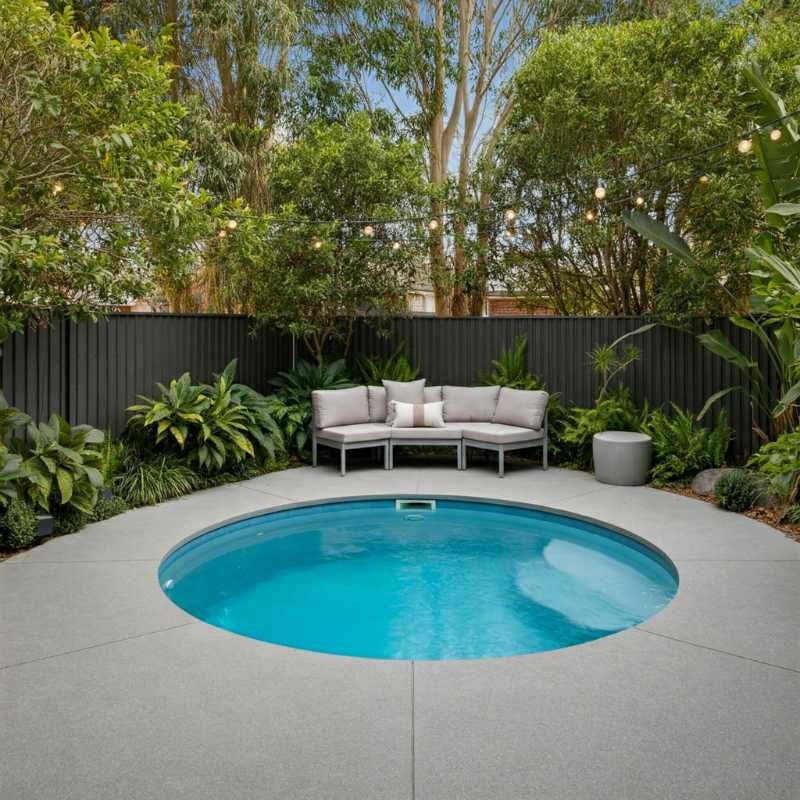
For homeowners wanting full design control, custom concrete plunge pools are built entirely on-site. They allow for any shape, size, or finish, giving you flexibility to match your landscape or architecture.
If you’re weighing durability, surface feel, and long-term upkeep, our comparison of concrete vs fibreglass vs precast plunge pools for Newcastle homes explains which option fits coastal conditions, budget, and access constraints.
Advantages and Disadvantages of Plunge Pools
Advantages:
- Compact size suits smaller yards.
- Uses less water and energy.
- Lower cleaning and maintenance costs.
- It can include heating, jets, or lighting for added comfort.
Disadvantages:
- Limited space for swimming laps.
- Custom concrete options can cost more upfront.
- Still requires council approval and fencing compliance.
How a Plunge Pool Improves Well-Being and Recovery
A plunge pool may be small, but its effects on the human body work much like the forces that shape our universe; powerful, precise, and often unseen. Cold water and warm water change how energy moves through the body, just as different temperatures change how matter behaves in space.
Rebalancing the Body Through Temperature
Cold water immersion makes the blood vessels narrow and then widen again as you warm up. This rhythm acts like a natural pump, improving circulation and helping your body recover from strain. It reduces swelling and muscle soreness, much like cooling a star stabilises its energy.
Muscle Recovery and Reduced Inflammation
When athletes use cold plunge therapy after training, they slow down the processes that cause fatigue. The body uses less energy to repair itself, meaning recovery happens faster. A plunge pool brings this scientific advantage into your backyard, giving your muscles time to heal.
Calm Mind, Calm Body
Cold water triggers endorphins, the chemicals that help you feel calm and clear. Warm hydrotherapy softens muscle tension and slows your breathing. Both reactions show how the human body responds to temperature, simple forces guiding complex systems.
Better Sleep Through Temperature Control
Your body prepares for sleep by lowering its internal temperature. Moving from cold water to warm air helps this process, making it easier to fall into deep rest. In this way, a plunge pool becomes a quiet tool for better sleep and better nights.
Clarity and Focus
Cold water sends a strong signal through your nervous system. It sharpens the senses, clears the mind, and boosts mood. You step out of the water feeling more awake much like looking at the stars and feeling a sudden sense of perspective.
A Daily Wellness Routine
Used regularly, a plunge pool becomes part of your everyday rhythm. In a warm city like Newcastle, it supports recovery, clarity, and stress relief. It is a simple reminder that small changes in temperature, in environment, in habit can create meaningful improvements in human well-being, just as small forces shape the universe on a grand scale.
Types of Plunge Pools
By Location:
Above Ground Plunge Pool
These pools rest above the earth, almost like a small platform floating over your backyard. They avoid the need for heavy digging, which makes them ideal for rocky or sloped Newcastle blocks. Their structure is stable and easy to install, showing how thoughtful design can overcome tough ground conditions.
Best for: tricky sites, tight budgets, faster installation.
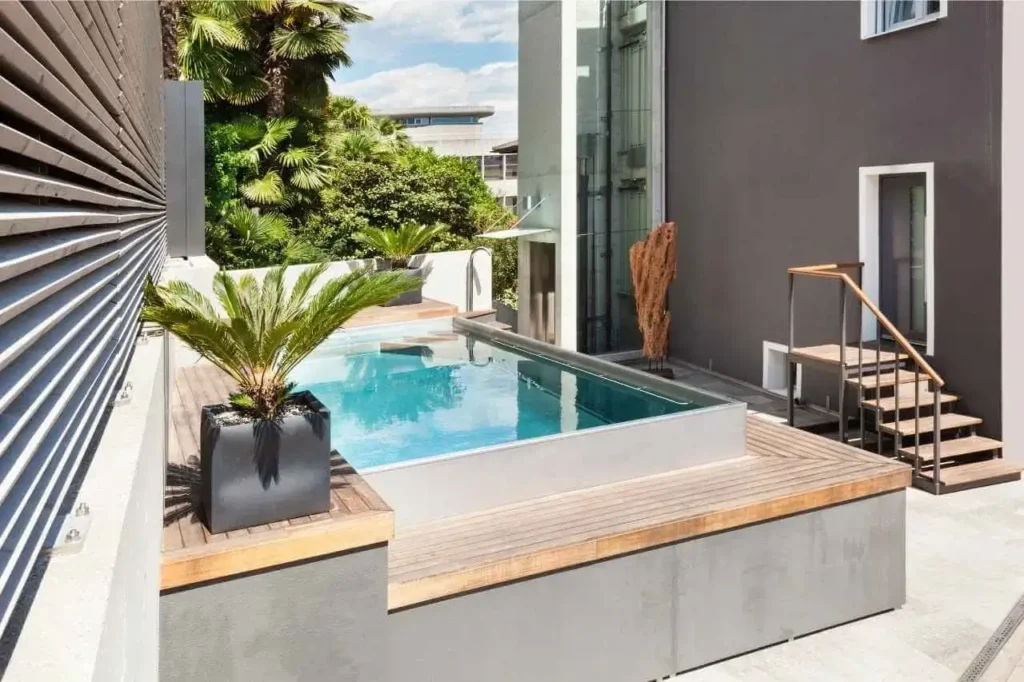
Semi-Inground Plunge Pools
A semi-inground plunge pool sits partly under the soil and partly above it. This balance helps it adapt to uneven land, much like how celestial bodies settle into stable orbits. It blends structure and landscape, turning slopes and levels into useful design features.
Best for: sloped blocks, modern design features, flexible layouts.
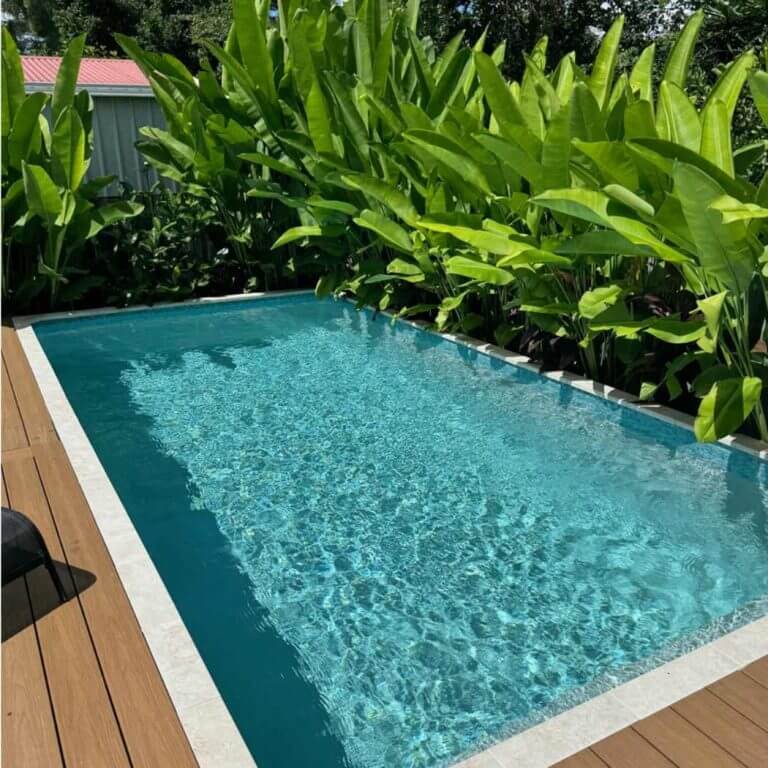
In-Ground Plunge Pools
An in-ground plunge pool rests completely within the earth, creating a smooth and natural look. It feels as if the water belongs to the land itself. This type suits homeowners who want a clean finish that becomes part of the environment.
Best for: permanent builds, modern backyards, luxury outdoor designs.
By Use
1. Heated Plunge Pools
When you add heat, the pool becomes a warm and calming place. It offers comfort across all seasons and works well for hydrotherapy. It is a simple example of energy creating change, helping the body recover and relax.
Best for: year-round swimming, muscle recovery, families.
2. Cold Plunge Pools
Cold plunge pools work in the opposite way. By lowering the temperature, you create a powerful tool for recovery. Athletes often use cold water to calm muscles and boost circulation. It’s a reminder that even small changes like temperature can have a big effect on the body.
Best for: athletes, fitness lovers, summer cooling.
Plunge Pool vs Spa vs Swim Spa: Which Is Right for You?
When comparing a plunge pool, a spa, and a swim spa, it helps to think about how each one uses energy, space, and motion, much like how different stars in the universe behave under different forces.
Plunge Pool
A plunge pool is small but deep. It works with gravity and water to cool your body and support gentle exercise. Its low running cost comes from using less water and less power, making it an efficient choice for Newcastle homes. In science, efficiency often leads to stability, and a plunge pool follows this rule perfectly.
Spa Pool
A spa is designed for warmth. Heat fills the water and brings comfort to your muscles, much like how energy spreads through stars. A spa fits into very small outdoor areas, but higher heat means higher running costs. It becomes a place to rest and slow down, almost like drifting in calm space.
Swim Spa Pool
A swim spa creates motion. Jets push water with force, letting you swim in place. This controlled resistance mirrors how objects in the universe move under pressure. Because a swim spa needs steady power to create these currents, it costs more to run. But it also gives you a way to exercise without needing a long pool.
When you look at all three options together, each one forms its own balance of space, energy use, and purpose. A plunge pool offers cooling and efficiency. A spa brings heat and comfort. A swim spa brings motion and strength. The best choice depends on how you want your outdoor space to feel and how you want your body to move through the water, much like choosing the right path through the stars.
How Much Does a Plunge Pool Cost in Newcastle?
A plunge pool in Newcastle costs $40,000 to $65,000, depending on the size, material, and site access. Custom concrete plunge pools can go higher, starting at $60,000 and reaching $150,000+ when you add upgrades, heating, and premium finishes.
Fibreglass and precast concrete plunge pools are the most affordable choices because they are pre-built and faster to install. They usually cost $40,000 to $65,000, including labour.
A custom concrete plunge pool is the premium option. It is built on-site and shaped to fit your yard, your house design, or any special features you want. Because it is fully custom, the price starts at $60,000 and can reach $150,000 or more, depending on the size, finishes, and features like tiles, steps, benches, or lighting.
Here is a simple breakdown:
| Type | Total Price Range (AUD) | Notes |
|---|---|---|
| Fibreglass Plunge Pool | $40,000 – $65,000 | Fast install, smooth surface, pre-moulded shape |
| Precast Concrete Plunge Pool | $40,000 – $65,000 | Craned into place, modern look, very durable |
| Custom Concrete Plunge Pool | $60,000 – $150,000+ | Fully custom-built on site, any size or finish |
A few things can raise or lower the total price of your plunge pool:
- Excavation: rocky soil, tight access, or sloped blocks can add costs
- Delivery: crane lifts or long transport distances
- Fencing: must follow NSW swimming pool rules
- Heating systems: solar, gas, or electric heating
- Decking and landscaping: surrounds, paving, or privacy screens
- Add-ons: LED lighting, steps, water features, jets, or covers
These factors help explain why plunge pool prices can vary so much from home to home in Newcastle.
Plunge Pool Maintenance Costs Over 10 Years (Real Examples from NSW)
Owning a plunge pool in NSW costs far less than maintaining a large pool. Over 10 years, most owners spend less than half the running cost of a standard pool.
Table: Typical 10-Year Ownership Costs
| Expense Type | Estimated Cost (AUD) | Frequency |
|---|---|---|
| Electricity & Heating | $500 – $1,200 per year | Annual |
| Chemicals & Cleaning | $300 – $600 per year | Annual |
| Repairs & Equipment | $1,500 – $3,000 | Over 10 years |
Using energy-efficient pumps, LED lighting, and pool covers can further reduce long-term expenses.
Installation Process: Step-by-Step Timeline
Installing a plunge pool in Newcastle is a step-by-step process that normally takes six to eight weeks. The exact timeline depends on the weather, the type of plunge pool, and how fast the council approves your plans. Each stage has its own tasks, and knowing them helps you plan your backyard project with confidence.
1. Site Assessment & Council Approvals (1–2 weeks)
The process starts with a site check. The installer looks at your soil, access, yard shape, and any underground services.
After this, you need the right approvals from Newcastle City Council. This may include a Development Application (DA) or Complying Development Certificate (CDC). This step also checks fencing rules and safety requirements under the NSW Swimming Pool Act 1992.
2. Excavation & Base Preparation (1 week)
Once council paperwork is approved, the excavation begins. The team digs the hole for the plunge pool, levels the ground, and prepares a solid base.
Rocky soil, tight access, or steep yards may add extra time. Most Newcastle blocks only need a simple dig, so this stage is usually fast.
3. Pool Delivery & Installation (1 week)
Fibreglass and precast concrete plunge pools arrive pre-built and are lifted into place with a crane.
Custom concrete plunge pools are built on-site, so this stage involves forming the steel frame and building the shell.
This part is exciting because the pool starts to take shape in your backyard.
4. Plumbing, Electrical & Backfilling (1 week)
Next, the installer connects the pump system, filtration, drainage, and electrical work. All electrical jobs must be done by a licensed electrician.
Once the pool is connected, the team backfills around the shell to secure it in place.
This step makes the pool safe, stable, and ready for finishing.
5. Finishing & Landscaping (1–2 weeks)
The final stage includes everything that makes your pool look complete-like decking, tiling, coping, lighting, or garden landscaping.
Many Newcastle homeowners choose timber decking, stone surrounds, or privacy screens to create a stylish outdoor area.
After this stage, your plunge pool is ready for water, fencing checks, and the final inspection.
Final Timeline
Most plunge pool installations in Newcastle take 6–8 weeks, depending on weather, soil type, and council approval speed.
Typical Plunge Pool Installation Timeline
| Stage | Description | Estimated Duration |
|---|---|---|
| Site Assessment & Council Approvals | Soil check, permits, and site inspection | 1–2 weeks |
| Excavation & Base Preparation | Digging and levelling the ground | 1 week |
| Pool Delivery & Installation | Crane placement or in-ground setup | 1 week |
| Plumbing, Electrical & Backfilling | Connection and structural work | 1 week |
| Finishing & Landscaping | Decking, tiling, and final touches | 1–2 weeks |
Best Time to Install a Plunge Pool in Newcastle’s Climate
The best time to install a plunge pool in Newcastle is spring or early autumn. These seasons have mild temperatures and more stable weather, which means fewer delays during excavation, crane work, concreting, and landscaping. Dry weeks also help the ground stay firm so builders can dig safely and set the pool base without water problems.
In spring, the earth begins to warm, and the air becomes steady. This helps excavation, plumbing, and concrete curing happen smoothly. Homeowners often choose this season because the pool is ready for the heat of summer, much like preparing a spacecraft before a long journey.
Early autumn brings another window of calm. After the busy summer months, builders have more availability, and temperatures drop to a comfortable level. In science, we often see systems perform best when outside forces are minimal. Autumn provides that balance.
Winter, by contrast, brings too much moisture. Soft ground, heavy rain, and slow curing times make installation harder and less predictable. It is similar to trying to study a star through clouds, you can do it, but the results are less clear.
So, whether you choose spring or early autumn, both seasons give your plunge pool the best chance of a smooth and timely installation. These periods offer the right mix of weather, ground stability, and builder readiness allowing your backyard project to unfold in a steady and reliable way.
Building Requirements and Council Compliance in Newcastle
Building a plunge pool in Newcastle is not just about placing water in the ground. It follows a set of rules much like the laws of physics; clear, necessary, and designed to keep everything in balance. The NSW Swimming Pool Act 1992 acts as the guiding force, shaping how each part of the installation must happen.
Council Approvals
Before the first shovel touches the soil, the project needs approval. A Development Application or a Complying Development Certificate works like the starting conditions of a scientific experiment. Without these conditions, the result cannot be trusted. The council checks your plans, your site, and any safety risks to make sure the project is safe to build.
Pool Fencing & Safety Rules
A plunge pool needs strong safety barriers, just as the universe needs gravity to keep systems stable. Fences must be the right height, gates must close on their own, and nothing around the pool can create a climbing risk. These rules protect children and visitors, and they are checked carefully before the pool can be used.
Site Plans & Engineering
Every pool needs detailed plans. These drawings show where the pool sits, how water will drain, and how the structure will hold its shape. Engineering reports act like the equations that describe how objects stay stable. Without them, the pool could shift or crack under pressure.
Plumbing & Electrical Work
Energy and flow must be controlled. Pumps, pipes, heaters, and lighting must be installed by licensed professionals. Their certificates prove the systems are safe, just as scientific measurements prove a theory is correct.
Final Compliance Check
At the end, an inspector checks that all rules have been followed. When everything is confirmed, you receive a Certificate of Compliance. This certificate is the final proof that your plunge pool meets the standards of both Newcastle and NSW; much like a validated scientific model that matches the universe it describes.
Following each rule creates a backyard space that is safe, stable, and ready for years of use, guided by the same idea that shapes all reliable systems: order leads to harmony.
Design and Customisation Ideas
Designing a plunge pool is a little like shaping a small world of your own. Every choice; light, colour, texture, or material changes how the space feels, just as different forces shape the stars and planets in the universe.
Lighting the Water
Underwater LED lights bring the pool to life after sunset. They reveal the movement of the water, the way light bends, and the calm space beneath the surface. A small pool can feel much larger when the glow spreads across the night.
Stone, Tile, and the Edges of Space
The materials around your pool act like the surface of a planet. Stone and tile create strength and structure, shaping how the pool meets the ground. These textures change how the space feels under your feet and how the water reflects the sky above.
Timber Decking and Soft Landscapes
Timber decking creates a warm platform around the water. It ties the pool to your home and makes the area feel natural and inviting. Like a stable orbit, it brings balance to the space, giving you room to sit, rest, and enjoy the view.
Glass Panels and Clear Horizons
Glass fencing keeps the area safe without blocking the scenery. It opens the space, much like looking out of a spacecraft window, clear, bright, and wide. In a small Newcastle yard, glass can create the feeling of a larger world.
Built-In Seating and Human Comfort
Built-in benches and steps offer places to sit, float, or stretch. These shapes work with the depth of the plunge pool to support relaxation and hydrotherapy. In the same way gravity guides movement in space, good design guides comfort in water.
Custom Features That Shape the Experience
Heating systems add warmth, jets add motion, and landscaping adds life. These elements help you build a pool that fits your routine whether you want cold-plunge therapy, warm water recovery, or a peaceful outdoor retreat.
A well-designed plunge pool becomes more than a structure. It becomes a small environment shaped by your choices, built to suit your space, and ready to give you a place to rest, just as the universe offers quiet moments between the stars.
Small-Yard Plunge Pool Layouts for Urban Newcastle Homes
Designing a plunge pool for a small yard is like arranging matter in a limited part of the universe. Even when space is tight, the right structure can create harmony and balance. A small area does not limit what you can create, it simply shapes your choices.
Corner Layouts
Placing a plunge pool in the corner of a yard uses the edges of the space, much like how planets settle into stable orbits. The centre remains open, giving the whole area a feeling of freedom even when the yard is small.
Slim and Narrow Plunge Pools
A slim plunge pool follows the long lines of a fence or side boundary. It behaves like a thin beam of light travelling through space; efficient, direct, and perfectly suited to narrow paths. This layout lets you enjoy the depth of the water without needing a wide area.
For tight Newcastle blocks and side-access yards, understanding how big a plunge pool usually is helps you choose a layout that stays comfortable without eating your whole backyard.
Courtyard Designs
In a courtyard layout, the plunge pool becomes the heart of the space. Decking, stone, and plants orbit around it, creating a calm environment. Even in a small backyard, this gives the feeling of a private retreat, like a quiet pocket of the universe untouched by noise.
Raised Pools and Feature Walls
A raised plunge pool adds height where there is little width. The wall becomes both structure and seating, changing the geometry of the yard. It shows that even small spatial changes can redefine an entire environment.
Smart Landscaping
Decking, vertical gardens, and tall plants bring softness to the area. By drawing the eye upward, they make the yard feel larger, much like looking up at the night sky makes the world around us feel more expansive.
Concrete Example
Imagine a small 4m × 5m yard. By placing a 2.5m × 2m plunge pool in one corner, adding timber decking along the side, and using tall plants behind the pool, the space becomes wider and calmer. The yard doesn’t grow in size, but the design changes how the space behaves.
In the end, a plunge pool in a small yard proves a simple idea in physics: when space is limited, thoughtful design can still create order, beauty, and a sense of openness.
Simple Plunge Pool Care Guide
Keeping a plunge pool clean and healthy is simple, but it does need regular care. Because plunge pools are smaller than full-size pools, they respond faster to changes in water balance, weather, or heavy use. Doing small checks each week helps your pool stay clear and safe without spending a lot of time or money.
1. Weekly Water Testing
Test your water once a week to keep the pH, chlorine, and alkalinity in the right range. Balanced water stops algae from growing and protects the pool surface and equipment. In hot Newcastle summers, you may need to test more often because warm water uses chlorine faster.
2. Clean the Filter
The filter catches dirt, dust, and small leaves. Clean or rinse the filter every 1–2 weeks so the pump and filtration system can work properly. A clean filter keeps the water clear and reduces strain on the pump.
3. Use a Pool Cover
A pool cover stops leaves, insects, and dirt from falling into the water. It also helps hold heat in winter and reduces evaporation in summer. Using a cover can save you money on power, chemicals, and water.
4. Brush and Skim Regularly
Brush the pool walls and floor once a week to remove dirt and prevent algae. Skim the surface for leaves or bugs. These small tasks keep your plunge pool looking fresh with very little effort.
5. Adjust Pump Run Time
Run the pump longer in summer and shorter in winter. In the warmer months, aim for 6–8 hours a day. In winter, 3–4 hours is usually enough. This keeps your pool clean while saving money on power.
6. Schedule a Yearly Service
A yearly check by a licensed technician keeps pumps, filters, heaters, and plumbing systems working well. This helps prevent expensive repairs and makes your plunge pool last longer.
How To Choose The Right Builder?
Choosing the right plunge pool builder is one of the most important parts of your project. A good builder will guide you through approvals, design options, installation, and final safety checks.
1. Pick a Licensed Newcastle Builder
Always choose a builder who is licensed in NSW and has real experience installing plunge pools in Newcastle. Local knowledge helps them handle soil types, weather, and council rules.
2. Check Their Past Projects
Look at photos, reviews, or case studies of their past plunge pool installs. This shows you their workmanship and gives you ideas for your own backyard.
3. Ask for a Detailed Written Quote
A clear quote should list everything:
- excavation
- pool shell
- plumbing and electrical
- equipment
- crane hire
- fencing
- decking
- finishing work
This helps you avoid hidden costs later.
4. Ask About Warranties
A good builder offers warranties on the pool shell, filtration system, and workmanship. Strong warranties protect your investment and give you peace of mind.
5. Confirm Council Knowledge
Your builder should understand Newcastle City Council rules, fencing requirements, and the NSW Swimming Pool Act 1992. A builder who knows the system can save you weeks of delays.
6. Check Communication
Choose someone who answers questions clearly and keeps you updated through each stage. Good communication leads to a smooth, stress-free project.
Conclusion
A plunge pool is a smart, stylish, and affordable choice for Newcastle homeowners who want to enjoy outdoor living without needing a large yard. With the right design and builder, you can transform your backyard into a personal retreat that adds comfort and value to your home.
Reach out to Plunge Pools Newcastle today for a free site check, custom design consultation, or installation quote. Our friendly team is ready to help you plan, design, and build your dream plunge pool right here in Newcastle.
FAQs
Can a plunge pool be installed indoors or under a patio in Newcastle homes?
Yes. A plunge pool can be built indoors or under a patio if waterproofing, drainage, and ventilation are properly designed. Always confirm structural requirements and council approvals before building.
What permits or inspections are required for heating systems in plunge pools?
Heating systems need electrical and plumbing compliance certificates under NSW standards. Always check with Newcastle City Council before installation to ensure all systems meet safety codes.
How can homeowners make their plunge pool more energy-efficient?
Add a solar heater, LED lighting, and a variable-speed pump. Using a pool cover helps retain heat and reduce water loss. These steps lower energy use and running costs year-round.
What are the best safety features to include in a family plunge pool?
Install compliant fencing, self-closing gates, and non-slip surfaces. You can also add pool alarms or safety covers for extra peace of mind. Always follow the NSW Swimming Pool Act 1992.
Can plunge pools be integrated with smart home or automation systems?
Yes. Modern plunge pools can connect to home automation for lighting, temperature, and filtration control via smartphone or voice assistant.