
As Newcastle’s Premier Plunge Pool Builder, we study valuer behaviour, buyer psychology, council rules and how each suburb responds to pool features so every homeowner understands the real uplift a plunge pool can create.
This guide explains how plunge pools affect value, which areas benefit most, what features increase appeal, and how to get the best return when selling your home. It also shows why many locals see a pool as a smart lifestyle upgrade and a clear sign of value to a property. With the right installation approach, a plunge pool can transform a simple outdoor space into a calm area for relaxation and enjoyment.
Why Newcastle Location Matters?
Newcastle’s location matters because warm summers, small blocks and outdoor living make plunge pools appealing to local buyers. In parts of Australia with similar coastal climates, this demand is even stronger. Suburbs like Merewether, Bar Beach, New Lambton and Warners Bay show the strongest value uplift when the pool suits the suburb, block and buyer type. Newcastle’s mix of housing styles also affects how well the pool integrates with the yard.
Suburb Trends
Merewether and Bar Beach
Coastal buyers see plunge pools as part of everyday beach living. Designs that match light, open outdoor areas perform well.
New Lambton and Adamstown
Family buyers focus on safety, heating and compliant fencing. Homes with year-round pool use often attract stronger offers.
Charlestown and Kotara
Value varies. Block shape, soil and access decide whether the pool fits the layout or works against it. Poor access or expensive excavation can reduce appeal.
Warners Bay and Lake Macquarie
Pools linked to lake views, decks or outdoor rooms deliver the best uplift. Buyers pay more when the pool connects to the outlook.
A plunge pool boosts value only when the design suits the suburb, block and buyer group.
How Do Valuers Assess Plunge Pools?
What Valuers Look At
Build quality and finish
Strong construction, clean finishes and durable materials increase value.
Safety, compliance and fencing
Proper fencing, compliant barriers and clear access paths are essential.
Placement and yard flow
Pools that sit naturally in the yard layout score higher than ones that feel cramped or forced.
Equipment efficiency
Modern pumps, filters and heating systems reduce the cost of ownership and justify higher valuations.
Key Point
A pool that fits the layout increases value. A pool that is worn, poorly placed or awkward in the yard reduces it.
Tip: Keep surfaces clean, water balanced, and equipment serviced. Proper care slows depreciation and protects the pool’s value through consistent pool maintenance.
Which Is Better: Permanent or Portable Plunge Pools?
Pool Type Comparison
| Pool Type | Fixed Asset? | Adds Value? | Buyer Perception |
|---|---|---|---|
| Permanent | ✔ Yes | ✔ Strong | Feels part of the home |
| Portable | ✘ No | ⚠ Low | Looks temporary |
Permanent Plunge Pools
Custom concrete, precast and fibreglass plunge pools are treated as fixed assets. Because they cannot be removed without major work, valuers include them as part of the property. As permanent structures, they increase resale value when designed well and appeal to most buyer groups.
Portable Plunge Pools
Portable units sit above ground and can be moved, so valuers treat them like furniture, not a structure. They may attract some buyer interest but rarely lift the sale price.
Key Point
For long-term value, a permanent plunge pool provides the safest and strongest return.
What Is the Cost, ROI and Value Equation of a Plunge Pool?
A Newcastle plunge pool usually costs $35,000–$70,000 and returns about 30–50% of that at resale. Annual running costs range from $600–$1,500, depending on power, water and equipment efficiency.
Average Ongoing Costs (Per Year)
Power and water: $600–$1,500
Cleaning and equipment: varies by pump, filter and heating type
Savings: solar heating, variable-speed pumps and eco-friendly systems help reduce bills
Long-Term View
Across a 5–10 year period, market growth often offsets depreciation. Simple upgrades such as new LED lighting, fresh coping or modern fittings can lift visual appeal and support a stronger resale price.
Design and Features That Increase Value
Position matters. A sunny, open spot away from walls feels natural and adds flow to the yard. Good integration with decking and lighting helps the pool look “built in”.
Top 5 Value-Boosting Features:
- Solar heating – Extends the swim season and lowers energy use, which appeals to cost-conscious buyers.
2. Energy-efficient pump – Reduces running costs and aligns with demand for low-energy homes.
3. LED lighting – Improves night-time safety and enhances the pool’s visual appeal.
4. Safe entry steps – Useful for families, older buyers and anyone needing easier access.
5. Good drainage – Prevents overflow, soil issues and damage to paving or nearby structures.
Avoid dark tiles, cramped layouts or oversized coping that eats up yard space. A pool should blend with the landscape, not dominate it.
The design and features of a plunge pool strongly influence how much value it adds to a home. Buyers prefer pools that are well-positioned, easy to use and blended into the landscape.
Features That Reduce Value
Avoid elements that make the yard feel small or impractical:
- Dark tiles that increase heat and reduce water clarity
- Cramped layouts that limit movement
- Oversized coping that takes up valuable space
A plunge pool adds the most value when it fits cleanly into the backyard pool area without restricting movement or access.
Because valuers judge yard flow and usable outdoor area, it helps to understand typical plunge pool dimensions for Newcastle backyards so your design feels integrated, not cramped, especially on smaller blocks in suburbs like New Lambton or Adamstown.
Newcastle Case Studies
| Location | Outcome | Key Insight |
|---|---|---|
| Merewether | +$60,000 uplift | Coastal buyers saw the pool as part of a lifestyle. |
| New Lambton | +$30,000 uplift | Family-friendly layout and safe design. |
| Charlestown | Negative | Poor placement reduced the usable yard. |
| Warners Bay | +$50,000 uplift | The pool design reflected lake views for a calm outdoor feel. |
Takeaway: Placement and design harmony drive results more than size or spend.
Risks, Misconceptions and Overcapitalisation
A plunge pool only adds value when it suits the home, block size and suburb. Overspending is common when homeowners ignore market limits or choose features beyond local affordability.
Main Risks
1. Overspending
Installing a pool that costs more than the area’s typical property values can reduce your return. Higher-end finishes may not be justified in suburbs with lower buyer budgets.
2. Poor placement or a cramped yard
A plunge pool placed too close to boundaries, outdoor rooms or fencing can make the yard feel tight and reduce usable space. Valuers consider flow, access and safety zones.
3. Skipping maintenance or safety compliance
Neglecting filtration, fencing, drainage or electrical compliance lowers the pool’s condition rating. Buyers discount homes when ongoing maintenance has been ignored.
Common Misconception
Portable pools do not add equity.
Valuers classify portable plunge pools as removable items, not fixed assets. They do not increase the home’s value or count toward the property’s improvements.
Newcastle-Specific Risks
Newcastle’s coastal air, salt spray and storms can wear down cheap metals, pumps and fittings. Stainless-steel hardware, quality coatings and good drainage protect the pool structure and prevent corrosion or flooding damage. These upgrades are worth the cost in coastal suburbs.
How to Maximise Value Before Selling
Quick Pre-Sale Checklist:
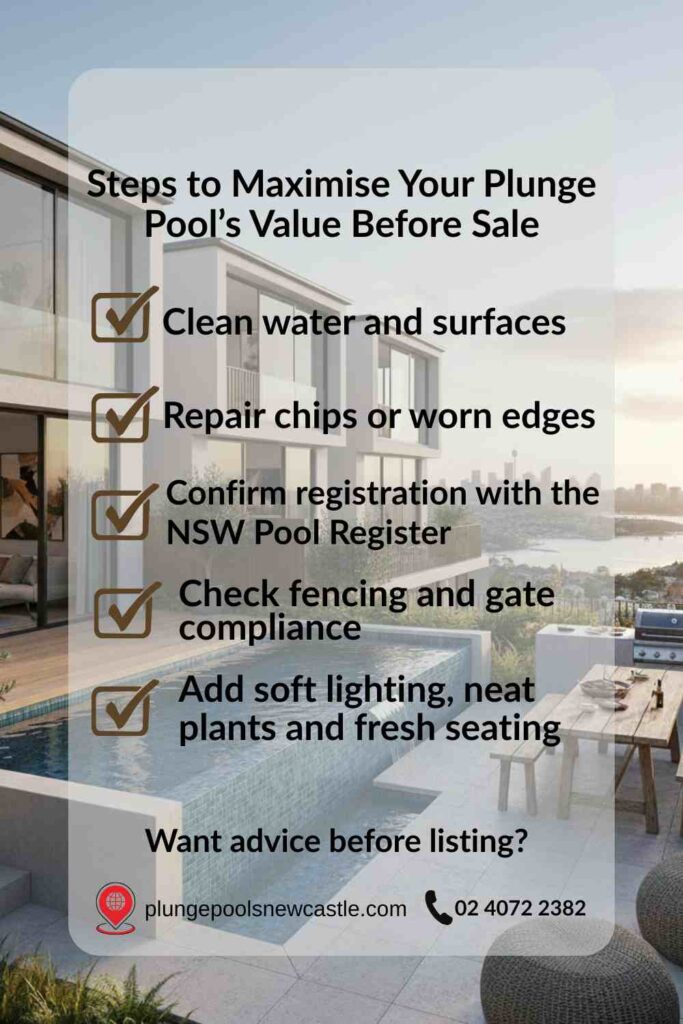
Buyers respond to pools that look safe, simple and cared for.
Should You Add a Pool for Resale?
Adding a pool increases resale value only when the suburb, buyer demand and home type align. Short-term sellers see smaller gains, while long-term owners benefit most through lifestyle use and stronger buyer appeal. If you enjoy backyard swimming or want a compact backyard pool for year-round comfort, the value uplift can be a bonus rather than the main reason to install one.
What to Check Before Installing
- Suburb price limits
Look at recent sales and buyer demand. Some suburbs have clear value caps, so spending beyond that can reduce return. - Block suitability
Make sure the pool fits the shape, access and size of your yard. Poor placement lowers appeal. - Upkeep and compliance
Plan for fencing, drainage, power, filtration and ongoing cleaning. Newcastle rules and safety standards must be met. - Quality materials
Choose durable finishes, good filtration, safe surfaces and strong structural support so the pool keeps value over time.
Work with a pool specialist to match your design to the block and suburb.
When the home style, suburb growth, buyer expectations and pool design align, a plunge pool becomes a steady value asset for most Newcastle properties.
Conclusion
A well-placed plunge pool can raise your Newcastle home’s worth, but only when it matches the block, suburb and buyer profile. Focus on design quality, safety and maintenance for the best resale return.
If you’d like expert help planning or valuing your pool project, Plunge Pools Newcastle can guide you. We design and build plunge pools that fit your lifestyle, suburb and budget.
FAQs
1. How do I know if adding a plunge pool will increase my home’s value in my specific Newcastle suburb?
A plunge pool adds value in suburbs where buyers want lifestyle features, such as Merewether, Bar Beach, Warners Bay and New Lambton. These areas reward quality design and low upkeep. When your block, suburb and buyer group align, the uplift becomes clear and predictable.
2. Which plunge pool features give the biggest resale boost for Newcastle buyers?
Solar heating, efficient pumps, clean decking and safe fencing give the biggest resale boost. Newcastle buyers want low running costs, simple care and a calm outdoor space. When the pool feels integrated with the yard, the final value rises more reliably.
3. How much should I spend on a plunge pool to avoid overcapitalising in Newcastle?
The safest spending range is thirty-five thousand to fifty-five thousand dollars. This level suits most Newcastle suburbs and avoids overshooting the market. When the build quality matches the home and suburb, your investment stays balanced and keeps its value.
4. Does a plunge pool make a home easier or harder to sell in different Newcastle buyer markets?
A plunge pool makes a home easier to sell to families, lifestyle buyers and professionals. It can be harder to sell to investors or retirees who prefer lower upkeep. When the design is simple and efficient, more buyer groups see it as an advantage.
5. What should I fix or upgrade on my plunge pool before putting my home on the market?
Clean the water, repair chips, refresh the surfaces and check fencing compliance. Small updates like LED lighting or a new pump make the pool feel modern. These simple improvements help buyers trust the condition and strengthen resale appeal.