
At Plunge Pools Newcastle, we help with design, council papers, and the full install work. We know the local soil and block types, so we help you pick a pool that will last.
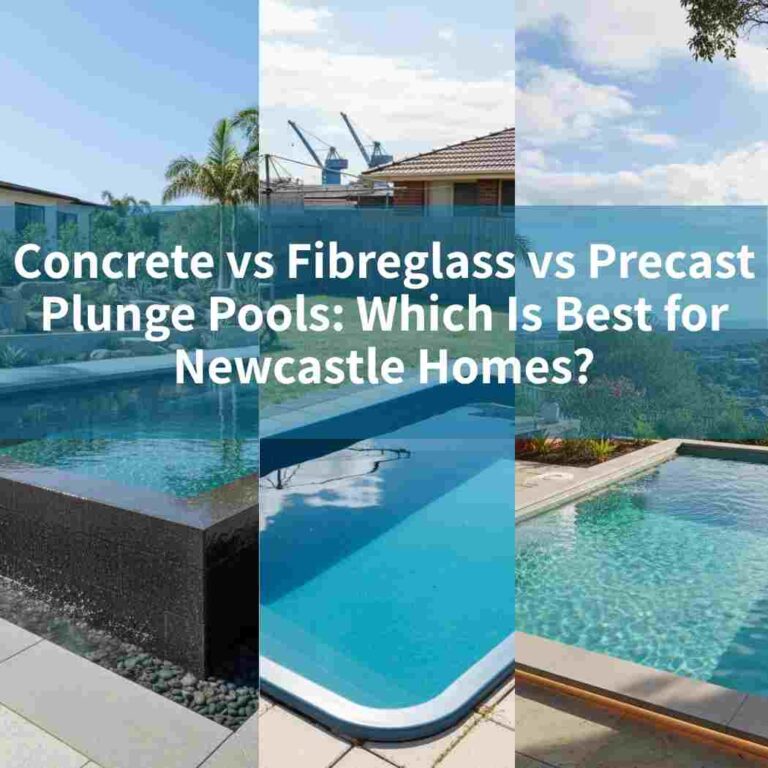
In this guide, you will learn how concrete, fibreglass, and precast plunge pools differ in strength, cost, lifespan, and installation time. You will also see the best use cases and a simple checklist to help you choose.
Defining Each Material

Concrete Plunge Pool
A concrete plunge pool is made on your land, shaped by steel and poured concrete. It is the strongest type of pool we can build, and it gives you full freedom to choose the form. In places like Newcastle, where we see sloped blocks and mixed soil types, concrete pools work like stable structures shaped to fit the land itself.
Concrete pools suit those who want a unique space, a design that fits around their home rather than the other way around. But this freedom comes with limits. Concrete needs time to cure, and the build takes longer. If the soil shifts, the pool can crack over many years.
Still, for those who want long life, custom shapes, and a luxury look, concrete is the closest thing to a pool built with the same patience and strength that shapes the universe itself.
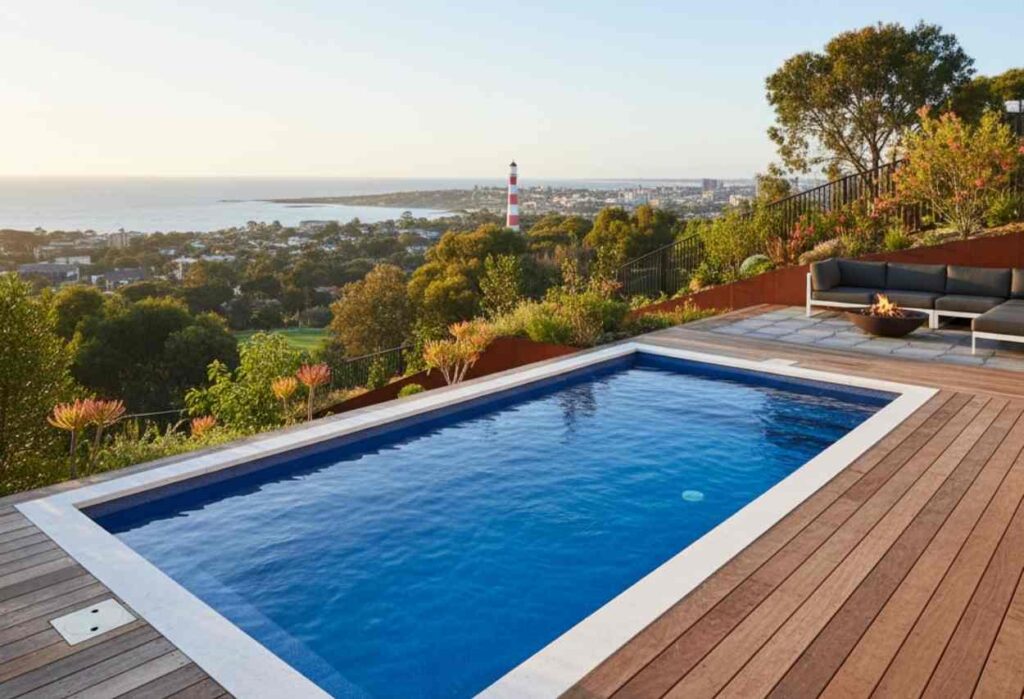
Fibreglass Plunge Pool
A fibreglass plunge pool arrives as a single, ready-made shell. It is smooth, clean, and shaped with precision. In Newcastle’s mixed climate, where warm summers meet cooler winds from the coast, fibreglass shells hold heat well because of their insulated layers.
These pools are for people who want simple care and fast installation. Yet even simple systems have boundaries. Fibreglass limits you to set shapes, and long years of sun can fade the colour. The shell must sit on stable soil, or it may move like a small object on shifting ground.
But when you want speed, low care, and comfort, fibreglass becomes the most efficient path like choosing the smoothest route through time and space.
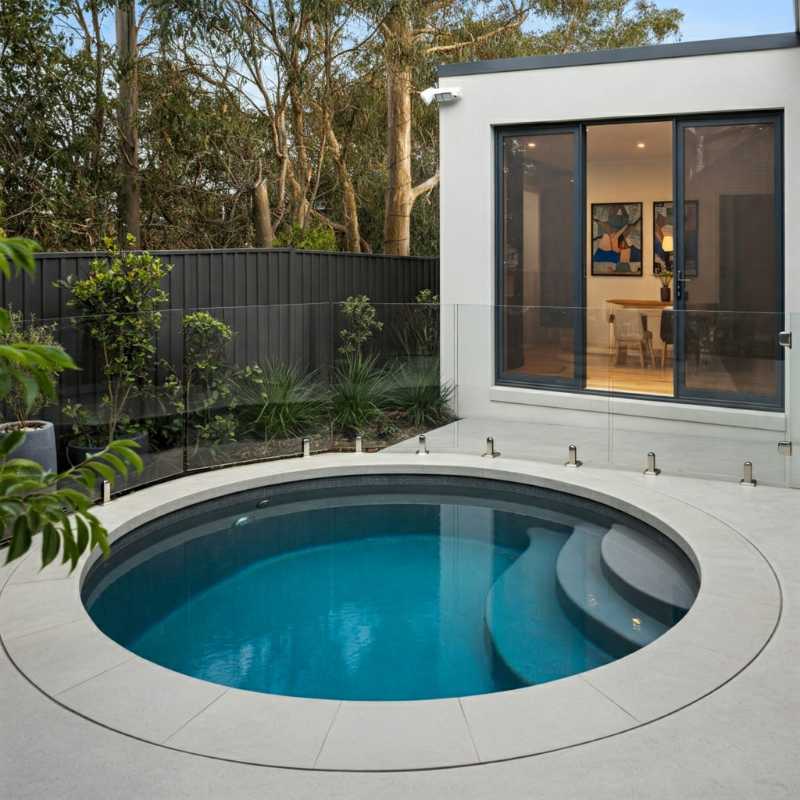
Precast Plunge Pool
A precast plunge pool is formed in a factory long before it reaches your home. Its concrete walls are cured and strengthened under controlled conditions. When the pool arrives, a crane places it into your yard in a way that feels almost precise like setting an object into orbit with one careful move.
Precast pools suit the compact yards of Newcastle’s inner suburbs, where access is narrow and time is short. They are strong, dependable, and stable. But they are also limited by the physics of transport: they can only be as large as the roads and crane can carry.
For balanced cost, strength, and fast installation, a precast plunge pool creates order from complexity much like the quiet rules that guide the universe.
Material Differences at a Glance
- Concrete: strongest and best for custom design
- Fibreglass: smooth surface and fastest install
- Precast: strong walls, good value, quick placement
How Each Material Performs
Water does not warm itself. It reacts to the world around it, drawing heat from sunlight, the air, and the ground below. In Newcastle, where warm days can fall into cool nights, the material of your plunge pool changes how long that heat remains.
Fibreglass Plunge Pool
A fibreglass plunge pool behaves much like an object wrapped in a light thermal shield. Its resin layers slow down the escape of heat, allowing the water to stay warm for longer periods. This is why families who rely on solar heaters or small heat pumps often choose fibreglass—it is simply more efficient.
Concrete Plunge Pool
A concrete plunge pool, by comparison, behaves differently. Concrete shares heat freely with the earth around it. Without added insulation, warmth escapes into the soil the same way a star loses energy into the dark of space. When builders add foam or thermal coatings, concrete becomes a more stable system, able to hold heat with greater control.
Precast Plunge Pool
A precast plunge pool lives between these two worlds. Its dense concrete walls, shaped in a controlled factory, offer a moderate level of insulation. It does not hold heat with the ease of fibreglass, yet it performs better than standard concrete poured on site.
In the end, insulation follows a simple rule: the material that slows energy loss the most provides the warmest water with the least effort. In this equation, fibreglass remains the most efficient, precast sits steadily in the middle, and concrete, with help, can perform well when shaped and insulated with care.
Manufacturing and Installation
Every plunge pool begins long before the first drop of water touches its surface. The way each pool is made shapes how it behaves, how fast it arrives, and how much disruption it brings to your home. In Newcastle, where some blocks slope like gentle hills and others sit tightly between older homes, these differences matter.
Concrete Plunge Pool
A concrete plunge pool is created on your land, piece by piece. Steel bars form the skeleton, and wet concrete fills the shape like a planet forming from dust. It takes time for the concrete to cure and harden. Weather, soil, and space all shape the final result. It is slow, but it offers complete freedom in design, like drawing your own map of the universe.
Fibreglass Plunge Pool
A fibreglass plunge pool is made far away in a controlled factory. It arrives as a single, smooth shell, ready to be lowered into the ground. This is the quickest path from an empty yard to a working pool. The process is simple: dig, prepare, lower, and connect. In physics, the shortest path is often the most efficient. Fibreglass follows that rule.
Real Project Case Study: Small Backyard Fibreglass Pool Installation in Bateau Bay
A recent installation on a fibreglass pool in Bateau Bay shows why so many homeowners prefer fibreglass for compact backyards. The project involved the installation of a 5.9m x 2.28m fibreglass pool in a small backyard with limited outside area and limited side access.
The homeowners were looking for a family-friendly pool that would fit easily in the small backyard and improve the overall outdoor living space.
The pool was designed to be constructed simply and effectively, despite the limited access the location had. The fibreglass pool, decking and frameless glass fencing has resulted in a modern, low maintenance outdoor space that is open, useful and inviting for the family to use.
View our small backyard fibreglass pool installation in Bateau Bay case study.
Precast Plunge Pool
A precast plunge pool is also born in a factory, but with thick concrete walls shaped and cured under perfect conditions. When it reaches your home, a crane lifts it into place in one clean movement. It feels almost precise, like placing a satellite into orbit. Limited only by transport size and crane access, a precast pool brings strength and speed together.
In the end, each pool type reflects a different way the world builds things: slowly on site, shaped quickly in a factory, or crafted fully before it even reaches your yard. The right choice depends on your land, your time, and the space you want to create.
Cost and Lifetime Value
The cost of a plunge pool is not just a number. It is the sum of time, materials, and the way each pool interacts with the world around it. In Newcastle, where soil shifts, winds cool quickly, and backyards come in many shapes, the price you pay today will echo through the years ahead in the resale value.
Concrete Plunge Pool
A concrete plunge pool is built by hand, shaped layer by layer. It asks for more money at the start because it offers freedom in form and design. But like any structure made from stone, it can change over time. The surface may wear, and the earth may move, calling for resurfacing as decades pass.
Fibreglass Plunge Pool
A fibreglass plunge pool arrives complete, smooth, and light. It costs the least to install and the least to maintain. Its surface needs fewer chemicals, and its insulation holds warmth like a small star holding its heat. For many families, it is the most efficient path through time and cost.
Precast Plunge Pool
A precast plunge pool forms in a factory long before it reaches your yard. Its walls cure under controlled conditions, giving it strength from the beginning. Its cost sits between concrete and fibreglass, and its upkeep stays low if the ground is stable beneath it.
In the universe of pool options, each material follows its own laws; cost, time, strength, and care. The right choice depends on how you want your backyard to look, how you want it to feel, and how much energy you wish to spend over the years that follow.
Advantages, Disadvantages and Common Problems
What are the pros and cons of a plunge pool, you’re wondering? Every plunge pool material has strengths and limits, much like the way different objects behave in the universe. The laws that shape concrete, fibreglass, and precast plunge pools are simple: strength, time, cost, and how the material reacts to the world around it. In Newcastle, where soil shifts and yards come in many shapes, these laws become even more important.
Concrete Plunge Pools
Concrete pools offer the most freedom. They can be shaped like anything you imagine, fitting sloped blocks and tight spaces. They are strong, but strength does not erase time. Concrete can crack if the earth moves, and the surface can wear, calling for resurfacing as the years roll on.
Concrete is best for homeowners who want a custom plunge pool design, a luxury finish, or a shape that fits a difficult backyard. But it asks for more money and more time, just like building a large structure from the ground up.
Fibreglass Plunge Pools
Fibreglass pools arrive in one smooth piece. They go into the ground quickly, almost like placing a small object into orbit with one simple action. They cost the least to install and the least to maintain because their surface resists algae and holds warmth with ease.
Their limits come from their design. You must choose from set shapes, and the colour may fade under long years of sun. If the soil is not stable, the shell may shift, reminding us that everything reacts to the ground beneath it.
Fibreglass is best for families who want low-maintenance plunge pools, fast installation, and stable heating costs over time.
Precast Plunge Pools
A precast plunge pool is formed in a factory long before it reaches your Newcastle home. Its concrete walls cure in perfect conditions, giving it strength from the start. It is lifted into place by a crane, making the installation quick and clean.
Its limits come from simple physics: the pool can only be as large as the truck can carry and the crane can lift. But its balance of cost, strength, and low upkeep makes it one of the most reliable choices.
Precast is best for tight urban backyards, coastal areas, and homeowners wanting both speed and stability.
In the End
Each plunge pool material; concrete, fibreglass, and precast, follows its own rules. When you understand those rules, you can choose the pool that fits your land, your lifestyle, and your long-term plans. In the universe of backyard design, the right choice is the one that aligns with the space you have and the future you want to build.
| Material | Advantages | Disadvantages / Risks |
|---|---|---|
| Concrete | Very strong, full custom design | Can crack, long build time, and algae if unsealed |
| Fibreglass | Fast install, smooth surface | Limited sizes, colour fading, and shell movement |
| Precast | Strong, fast placement | Heavy transport, size limits, and fewer finishes |
Environmental Impact and Care
Every plunge pool affects the environment in different ways. Some pools use more materials at the start. Others use more energy over time. Each choice changes how your pool lives with the world around it, just as objects in the universe follow their own rules of motion, decay, and balance.
Concrete Plunge Pool
A concrete plunge pool is built from steel and heavy layers of concrete. It uses the most resources because it is shaped on your land, piece by piece. Yet concrete can last for many decades. Its long life reduces waste, even though its construction asks more from the environment at the beginning. Over time, its surface may wear, much like a planet shaped slowly by wind and time.
Fibreglass Plunge Pool
A fibreglass plunge pool begins in a factory with controlled precision. It produces less waste, uses fewer chemicals, and needs the least energy to heat because its shell holds warmth like a small, insulated star. Its simple surface fights algae, reducing the need for constant cleaning. In the long run, fibreglass creates the smallest footprint for many Newcastle homes.
Precast Plunge Pool
A precast plunge pool is formed away from your yard in a controlled space. Its concrete walls cure under perfect conditions, making it strong and stable. It uses fewer materials than a full on-site concrete build, though it still needs a crane to reach your backyard. This balance of strength, durability, and low care makes precast pools an efficient option across many years.
In the wide space of backyard choices, each plunge pool material follows its own path; resource use, energy cost, water care, and long-term stability. The best choice is the one that aligns with your land, your lifestyle, and the impact you want to leave on the world around you.
Best Use Cases
The best plunge pool material depends on your backyard layout, soil type, budget, and how much care you want to put in over the years. Each pool type, concrete, fibreglass, and precast, works best in different situations, especially across Newcastle’s mix of coastal suburbs, sloped blocks, and tight urban areas.
Concrete Plunge Pools: Best For Custom Designs & Sloped Newcastle Blocks
Concrete plunge pools work best when you want full control over your pool shape, size, depth, or finish. They suit backyards that are hard to work with, including:
- sloped blocks in Charlestown, Merewether, and Maryland
- awkward or narrow spaces where a ready-made shell won’t fit
- luxury outdoor areas wanting custom designs, tiling, or unique features
- homes with difficult soil, like clay pockets or old fill
Concrete is also ideal when you want a plunge pool that becomes a long-term feature of your home and backyard design.
Fibreglass Plunge Pools: Best For Fast Installs & Low Maintenance
Fibreglass plunge pools work best for homeowners who want quick installation and simple care. These pools suit:
- small or flat Newcastle backyards in Mayfield, New Lambton, and Fletcher
- families wanting easy cleaning and low chemical use
- homeowners wanting fast installation (1–3 days)
- rental homes needing a low-maintenance plunge pool
- people wanting lower energy bills because the shell holds heat well
Fibreglass is also ideal when you want a set, simple design that is ready to go with very little site work.
Precast Plunge Pools: Best For Tight Access & Urban Newcastle Homes
Precast plunge pools are perfect when you want fast installation but still want strong concrete walls. They suit:
- tight-access suburbs such as Wickham, Hamilton, Adamstown, and Cooks Hill
- backyards with little space for machinery
- homeowners wanting a strong, long-lasting pool without a long build
- homes needing fast installation, especially where time is limited
- rental homes or investment properties needing simple upkeep
Precast is also great for modern homes wanting a clean, minimalist design with durable concrete.
Which Material Lasts Longest or Needs the Least Care?
The lifespan and maintenance needs of a plunge pool depend on the material, the soil under it, and the weather around your home. Newcastle has both sandy coastal areas and clay-based suburbs, so each pool material behaves differently over time.
Here’s how each one performs in long-term durability and day-to-day care.
Concrete: Longest Lifespan (50+ Years)
Concrete plunge pools last the longest because they are built with steel and thick concrete. With proper care, they can stay strong for 50 years or more. This makes concrete the best choice for homeowners wanting a plunge pool that will last a lifetime.
But concrete also needs more maintenance.
- The surface can wear down over time
- It may need resurfacing every 15–25 years
- It needs regular brushing to stop algae
- Soil movement in Newcastle’s clay zones may cause cracking
Best for: long-term homes, custom designs, luxury projects.
Fibreglass: Least Maintenance (Simple & Low Cost)
Fibreglass plunge pools need the least care of all materials. The smooth gelcoat stops algae sticking to the walls, so it needs fewer chemicals and less scrubbing. Because it holds heat well, it also uses less energy to warm up during colder months.
Fibreglass pools have a lifespan of 20–30 years.
The most common wear issue is colour fade from sun exposure, which may happen after many years.
Maintenance benefits:
- lowest chemical use
- fastest cleaning
- lowest heating cost
- no resurfacing needed
Best for: families, rental homes, busy homeowners wanting a low-maintenance plunge pool.
Precast: Best Balance of Durability & Simple Care
Precast plunge pools offer the best mix of long lifespan and low maintenance. They are made from dense, factory-cured concrete, so the shell is already strong before it reaches your home.
When installed on stable soil, a precast pool can last 40+ years with very little upkeep.
Maintenance needs:
- light cleaning
- moderate chemical use
- no major resurfacing required
- very low chance of structural cracking
Precast suits Newcastle suburbs with tight access, because the pool arrives ready to place with a crane.
Best for: urban blocks, modern homes, homeowners wanting strength without high maintenance.
How to Choose the Right Plunge Pool Material
Choosing the right plunge pool material depends on your budget, your backyard shape, your soil type, and how much time you want to spend on care. Newcastle has a mix of sandy soil near the coast, clay pockets inland, and sloped blocks in suburbs like Merewether and Charlestown. These local conditions make the choice even more important.
Below is a simple guide to help you decide.
1. Budget and Time
If you want a fast and low-cost installation, fibreglass or precast is the best choice.
Fibreglass
- lowest upfront cost
- installed in 1–3 days
- ideal if you want a “quick and easy” plunge pool
- great for rental properties or busy families
Precast
- mid-range price
- very fast install (usually under a week)
- good for tight-access blocks in Newcastle
- fewer delays because it is built in a factory
Concrete
Choose concrete when you want a custom design, not when you want a fast job.
- best for unique shapes or luxury backyards
- highest cost
- longest build time (3–6+ weeks)
2. Shape and Look
Your design goals matter just as much as your budget.
Concrete
- can be any shape, size, or depth
- add tiles, custom steps, infinity edges, or luxury finishes
- perfect for sloped or awkward blocks
Fibreglass
- comes in set shapes and sizes
- simple looks but very clean and modern
- smooth gelcoat surface
Precast
- popular in compact urban Newcastle homes
- also fixed sizes
- strong, minimal, and modern look
3. Care and Life
Think about how much time you want to spend caring for your pool.
Fibreglass
- least maintenance
- smooth surface = fewer chemicals
- lowest cleaning time
- lifespan: 20–30 years
Concrete
- longest lifespan (50+ years)
- highest upkeep
- may need resurfacing
- more brushing needed
Precast
- balanced choice
- strong concrete shell
- low maintenance
- long lifespan (40+ years)
If you’re choosing between fibreglass, precast, and custom concrete based on budget, this guide on plunge pool installation cost in Newcastle shows what most homeowners actually pay once site access, soil conditions, and fencing compliance are included.
Summary Comparison Table
| Feature | Concrete | Fibreglass | Precast |
|---|---|---|---|
| Customisation | ★★★★★ | ★★☆☆☆ | ★★★☆☆ |
| Durability | ★★★★★ | ★★★★☆ | ★★★★★ |
| Installation Speed | ★☆☆☆☆ | ★★★★★ | ★★★★☆ |
| Cost Efficiency | ★★☆☆☆ | ★★★★☆ | ★★★★☆ |
| Maintenance | ★★★☆☆ | ★★★★★ | ★★★★☆ |
| Lifespan / ROI | ★★★★★ | ★★★☆☆ | ★★★★☆ |
Conclusion
Choosing the right plunge pool for your Newcastle home comes down to what matters most to you—budget, backyard shape, soil type, installation time, care needs, and how long you want your pool to last. Concrete, fibreglass, and precast plunge pools all offer strong benefits, but each one fits a different kind of home and lifestyle.
If you need help choosing the right plunge pool, Plunge Pools Newcastle can guide you. We are experts in building plunge pools and handle design, approvals, and installation from start to finish.
Contact Plunge Pools Newcastle today to get advice or start planning your new pool.
FAQs
Do I need council approval for all plunge pool types in Newcastle?
Yes. All pool types need approval under NSW rules. You may need a Development Application or a Complying Development Certificate, depending on your block and safety requirements.
Can concrete, fibreglass, or precast pools be heated in cooler months?
Yes. All types work well with heat pumps, gas heating, or solar. Fibreglass and precast hold heat slightly better.
What safety rules apply to plunge pools in NSW?
All pools must follow the NSW Swimming Pools Act and AS1926. This includes a compliant fence, a self-closing gate, and a safe access area.
Can I add features like jets or tiles to all pool types?
Yes. Concrete offers full freedom. Fibreglass and precast also allow features, but only within the limits of their shell design
Do Newcastle soil types affect installation?
Yes. Sandy soil needs support, clay needs drainage, and sloped blocks may need retaining walls. Concrete and precast handle tough soil well. Fibreglass needs a very stable base.