
At Plunge Pools Newcastle, we specialise in constructing pools tailored to Newcastle’s unique environmental conditions. This includes managing coastal salt exposure, clay-heavy soils, sloped or compact backyards. Our designs prioritise structural integrity, longevity, and compliance with NSW swimming pool regulations.
This guide gives you a quick, clear look at plunge pool costs in Newcastle, what to expect for permits and site-specific fees, and how soil, access, and upgrades can shift your budget. You’ll also find smart tips for cutting costs with eco-friendly options. Keep reading to get the full picture and plan your pool with confidence.
Key Takeaways
- Most plunge pools in Newcastle cost $40,000–$65,000 including labour and depending on size, materials, and site conditions. Custom concrete pools may exceed $100,000+.
- NSW regulations require council approval, fencing certification, and an occupancy inspection—typically costing $200–$800 total.
- Sandy, clay, or rocky soils increase the need for excavation, drainage, or reinforcement, adding $1,500–$6,000+.
- Features like solar heating, LED lighting, automated cleaning, and glass fencing can add $2,000–$12,000+ to the budget.
- Solar systems, variable-speed pumps, and rainwater collection reduce energy use and operational costs by up to 50% annually.
- A well-designed plunge pool boosts resale value and buyer appeal in Newcastle’s competitive housing market.
How Much Does a Plunge Pool Cost in Newcastle?
The plunge pool cost in Newcastle ranges from $40,000 to $65,000, depending on the pool type, backyard conditions, and add-ons like solar heating or LED lighting. For a custom-built concrete plunge pool, costs can go as high as $100,000+. Here’s the breakdown:
| Pool Type | Total Price Range (Including labour) |
|---|---|
| Fibreglass | $40,000 – $65,000 |
| Concrete Precast | $40,000 – $65,000 |
| Custom Concrete | $60,000 – $150,000 |
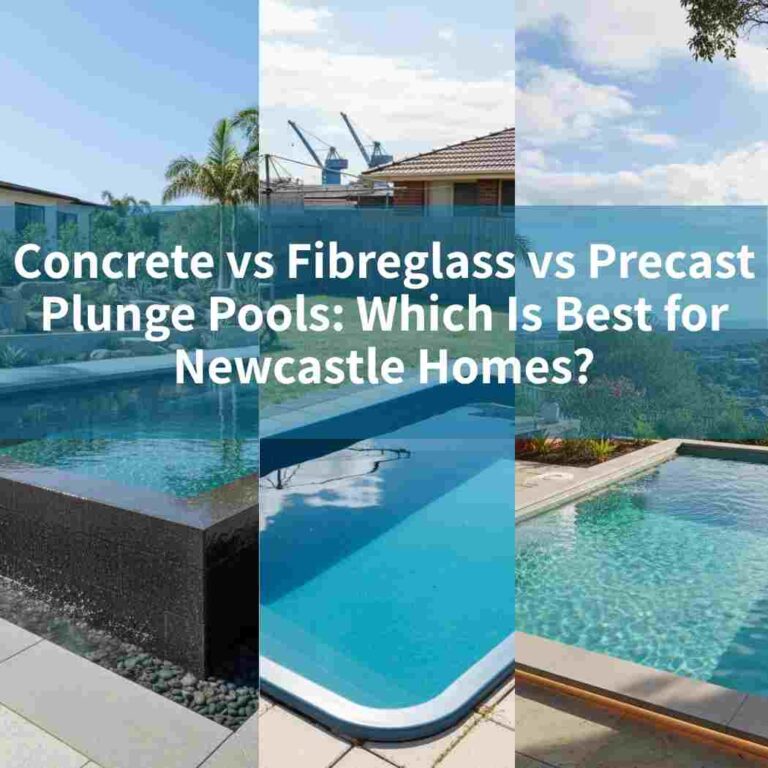
Fibreglass Plunge Pools ($40,000 – $65,000)
Fibreglass plunge pools are usually the cheapest option for homeowners in Newcastle who want a quick installation and a low-maintenance pool. The pool shell is produced off-site and shipped ready to install which means labour costs and construction time are usually less than for a custom concrete project. The final cost will be affected by the size of the pool, site access, the need for excavation, fencing, and any other amenities such as heating or lighting.
Precast Concrete Plunge Pools ($40,000 – $65,000)
Precast concrete drop pools bring the strength of concrete with a faster installation method. These pools are made in a controlled industrial setting and then moved to site and jacked into place. Costs are comparable to fibreglass pools, although the ultimate price can be affected by access constraints, crane hiring, site preparation and landscaping. A precast pool is a common alternative for homeowners who want a concrete pool but don’t want to wait for the long building time of a custom-built pool.
Custom Concrete Plunge Pools ($60,000 – $150,000+)
The most flexible and premium choice is a custom concrete plunge pool. Unlike fibreglass and precast pools, they are created fully on-site and may be tailored to suit practically any backyard shape, size, depth or style preference. The extra personnel, engineering, excavation, structural work and extended building period necessary all contribute to the expense. Features such as custom tiling, infinity edges, water features, built-in spas and difficult site conditions can significantly boost the overall cost of the project.
What Permits Are Needed for Plunge Pools in NSW?
To install a plunge pool in Newcastle or anywhere in NSW, the permits you’ll need are:
- Development approval or a complying development certificate. According to the City of Newcastle’s Swimming Pool Requirements, all pool owners must ensure their pool is registered, approved, and compliant with safety and fencing regulations before installation begins.
- Pool fencing compliance certification (mandatory). NSW Fair Trading outlines the legal standards for pool barriers, including fencing height, gate specifications, and maintenance rules required for safety compliance under state law.
- Occupancy inspection once installed
Costs vary depending on local council policies, but typically range from $200–$500 for the application, plus $150–$300 for compliance checks.
What Influences Your Plunge Pool Cost?
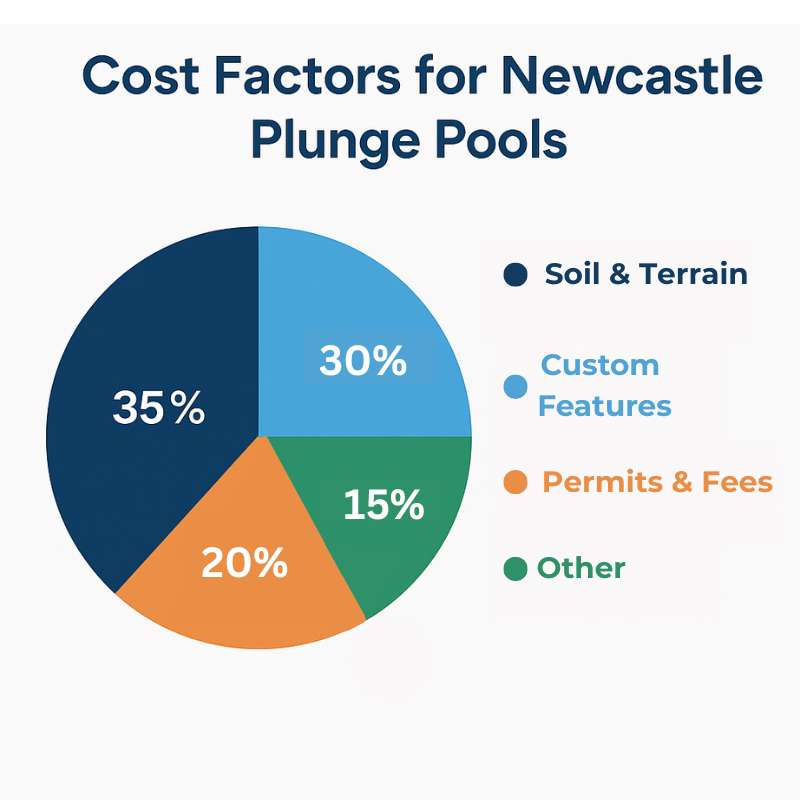
It’s not just about picking a pool and digging a hole. Where you live, what’s under your backyard, and Newcastle’s coastal climate all play a role in the final price. Certain factors, like difficult terrain or extra reinforcements can lead to increased costs. Here’s what you need to know before you start.
Newcastle’s Climate: A Hidden Cost Factor
Living near the coast comes with stunning ocean views but it also brings added challenges for pool maintenance. Newcastle’s coastal climate can affect both the installation process and the long-term care of your plunge pool.
- Salt & humidity – If you’re near the beach, fibreglass or treated concrete is a must. Salt and moisture eat away at cheap materials, so cutting corners now will cost you later.
- Temperature swings make year-round swimming a challenge, unless you invest in a heating system. Options range from solar (starting around $3,000) to gas (over $10,000), depending on how quickly you want your pool heated.
- Coastal wear and tear is a real concern, salt in the air can accelerate corrosion in pool pumps and equipment. If your home is near the ocean, be prepared for higher maintenance costs to keep your system in top shape.
How Does Newcastle’s Soil Affect Plunge Pool Installation?
Newcastle’s soil types; ranging from sandy coastal substrates to clay-heavy inland areas significantly impact pool stability and excavation costs. Here’s how:
- Sandy soil shifts easily, requiring extra steel reinforcements or concrete footings.
- Clay soil holds water, increasing the risk of movement and needing advanced drainage systems.
- Rocky terrain requires excavation with heavy machinery, increasing cost and time. The City of Newcastle’s soil management provisions highlight that certain soil types, such as expansive clays or sandy substrates, may necessitate additional engineering solutions, like reinforced footings or specialised drainage systems to maintain the integrity of structures like plunge pools.
Addressing soil challenges early prevents structural issues and unexpected costs down the line.
Installer Quote: In Bar Beach, sandy soil required additional steel framing and cost an extra $2,800, but ensured structural stability long term.
How Does Backyard Access Affect Plunge Pool Costs?
One of the most ignored aspects that can have a huge impact on plunge pool construction prices is backyard access. The pool itself may fit very easily in the area given, but getting excavation equipment, materials and the pool shell into the backyard presents issues that require expert planning.
Properties with tight side access, steep roads, adjoining structures, retaining walls or limited access points may require alternate installation methods. Depending on site conditions this may include smaller excavation equipment, crane lifts, staged excavation, additional labour or customised delivery options. These considerations can add to the cost of installation, but are often important to guarantee the project is executed efficiently and securely.
Real Installation Project Case Study: Fibreglass Plunge Pool Installation in Maitland
The most recent fibreglass plunge pool project in Maitland was completed for local homeowners wanting a pool that would sit nicely in their small backyard and offer a functional space for relaxing and family use. They also sought a solution that could be constructed faster than a standard concrete pool without losing functionality.
The biggest problem was the small garden and tight access to the property. Careful preparation was required to arrange excavation, pool transport and installation effectively but with minimal inconvenience to the house.
The homeowners were able to take advantage of their outdoor space and enjoy a faster install by opting for a fibreglass plunge pool and executing a considered installation process.
View our fibreglass plunge pool installation in Maitland case study.
Coastal Weather Considerations
- Salt corrosion affects pumps and finishes—choose marine-grade materials.
- Solar pool heating is ideal due to high sun exposure.
From Installer: When we installed a plunge pool in Merewether, the sloped terrain added $5,000 due to retaining wall construction—but it made the pool possible in a tight space.
Worried your soil type might impact your pool installation?
Talk to our experts to understand what’s beneath your backyard and how to plan for it.
Get Expert Site Advice Now ➔Customisation & Extra Costs
A basic plunge pool gets the job done but adding the right upgrades can take it to the next level in both style and functionality. The best part? You’re in control of how much you spend. Whether you want premium features that enhance comfort and aesthetics or prefer to keep things simple and cost-effective, there are options for every budget. Here’s a breakdown of the most popular add-ons and what they typically cost.
Popular Plunge Pool Features in Newcastle & Their Costs
| Feature | Cost Estimate |
|---|---|
| Heating System (Solar/Gas/Electric) | $3,000 – $10,000 |
| LED Lighting | $500 – $2,000 |
| Water Features (Fountains, Jets) | $1,000 – $5,000 |
| Automated Cleaning System | $2,000 – $6,000 |
| Glass Pool Fencing | $8,000 – $12,000 |
- Heating System – If you want to swim in winter, get a heater. Solar saves you money long-term, electric heats faster, and gas is instant but costs more to run.
- LED Lighting – Cheap, easy, and makes night swims feel incredible.
- Water Features – Fountains, waterfalls, spa jets—they’re nice, but not a must-have.
- Automated Cleaning – Hate cleaning? This cost-effective solution pays for itself.
- Glass Pool Fencing – Legally required. Newcastle council doesn’t give you a choice, but at least it looks good.
Customer Insight: Sarah in Hamilton opted for LED lighting and automated cleaning—raising the budget by $6,000, but cutting down on maintenance time by 70%.
Eco-Friendly & Efficient Pool Upgrades
Want to save thousands on running costs while keeping your pool eco-friendly? Good news—Newcastle’s sunny climate makes it the perfect place to cut energy use and maximise efficiency. Here’s how to make your plunge pool cheaper to run, easier to maintain, and better for the environment.
Solar Heating
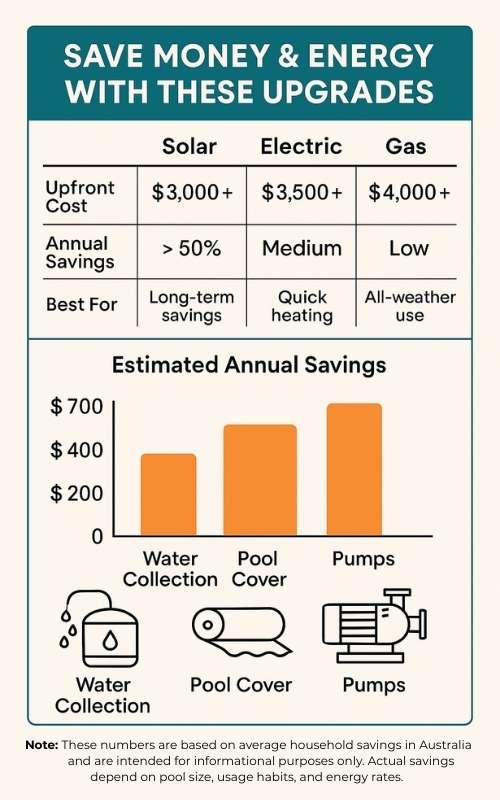
Solar heating is a smart, long-term investment for Newcastle homeowners thanks to the region’s abundant sunshine. With upfront costs ranging from $3,000 to $6,000, solar systems can reduce annual heating bills by 50% or more compared to gas or electric options. While traditional heaters warm your pool faster, they come with higher ongoing costs. For those seeking a low-maintenance, energy-efficient solution, solar is the clear winner.
| Heating Type | Upfront Cost | Ongoing Cost | Best For |
|---|---|---|---|
| Solar | $3,000 – $6,000 | Very low | Sustainable, long-term savings |
| Electric | $3,500 – $7,000 | Medium | Quick heating, smaller pools |
| Gas | $4,000 – $10,000 | High | Instant heating, all-weather use |
How to Save Water in My Newcastle Plunge Pool?
Saving water in your Newcastle plunge pool isn’t just good for the environment, it’s smart for your wallet, especially in drought-prone areas. Start with a pool cover, which can reduce evaporation by over 50%, saving thousands of litres annually. Consider adding a rainwater collection system to refill your pool without relying on paid tap water.
Upgrading to an eco-friendly filtration system also helps by minimising chemical use and reducing water waste, all while keeping your pool clean and clear. These upgrades make your plunge pool more self-sufficient and cost-efficient over time.
How to Reduce Electricity Costs for a Plunge Pool?
To reduce costs for your plunge pool, consider upgrading it with energy-efficient pumps and automated cleaning systems, it can reduce electricity use by up to 30% annually. Features like variable-speed pumps adapt energy output to your pool’s needs, cutting excess power use. Robotic cleaners offer low-energy maintenance while keeping your pool spotless, and in-floor cleaning systems eliminate manual upkeep entirely.
When paired with solar heating and water-saving features, these upgrades make your pool cheaper to run, easier to maintain, and more durable, delivering long-term savings and hassle-free ownership.
Conclusion
Installing a plunge pool in Newcastle is a smart way to enjoy the benefits of a private pool without the hefty price tag of larger builds. With typical costs ranging from $40,000 to $65,000 and options to customise based on your needs, site, and budget, you can create a space that adds both lifestyle value and long-term appeal. Whether you’re just starting your research or ready for quotes, knowing the cost factors upfront helps you plan with confidence.
At Plunge Pools Newcastle, we turn your backyard into a relaxing retreat built for everyday living. As one of the region’s trusted pool installers, we take care of the entire process—from council approvals and excavation to installation and landscaping, so you can enjoy the journey without the stress.
Next Steps
Read our next article in this series about the pros and cons of plunge pools. If you need personalised help and a consultation, don’t hesitate to give us a call or follow the button below to fill out the contact form.
Ready to turn your backyard into a relaxing oasis?
Partner with Newcastle’s leading plunge pool specialists for a seamless, stress-free install.
Request Your Free Consultation ➔Disclaimer:
All pricing and installation timelines mentioned are general estimates based on recent industry trends and past client projects. Actual costs may vary depending on site conditions, materials, and council requirements. For precise figures, we recommend a professional site assessment.
Frequently Asked Questions
Do You Need Council Approval for a Plunge Pool in Newcastle?
Yes, installing a plunge pool in Newcastle requires council approval. Local regulations mandate permits for safety, zoning, and compliance with NSW pool fencing laws. Starting without approval can lead to costly fines and project delays. Always consult Newcastle City Council before beginning your installation to ensure a smooth, legal build.
How Long Does It Take to Install a Plunge Pool in Newcastle?
Installation time for a plunge pool in Newcastle depends on the type you choose:
- Fibreglass pools are the fastest, typically completed within 2–3 weeks.
- Concrete pools offer full customisation but take longer—usually 3 to 6 months.
- Above-ground options are the quickest, often ready in just 1–2 weeks.
Can You Install a Plunge Pool on a Sloped Backyard?
Yes, you can install a plunge pool on a sloped backyard in Newcastle but it’s more complex than a flat-site build. Sloped blocks often require retaining walls or site levelling, which can add $3,000 to $10,000 to your project. For long-term stability, custom-built plunge pools are engineered to suit uneven terrain, though they come at a higher cost. If you’re looking for a simpler, more affordable option, above-ground plunge pools offer a hassle-free solution with no excavation required.
What is the Best Time to Install a Plunge Pool in Newcastle?
The best time to install a plunge pool in Newcastle is during autumn or winter. Cooler months mean shorter wait times from builders and better off-season pricing, helping you save both time and money. More importantly, it ensures your pool is fully ready before summer, so you can dive straight in when the heat hits.