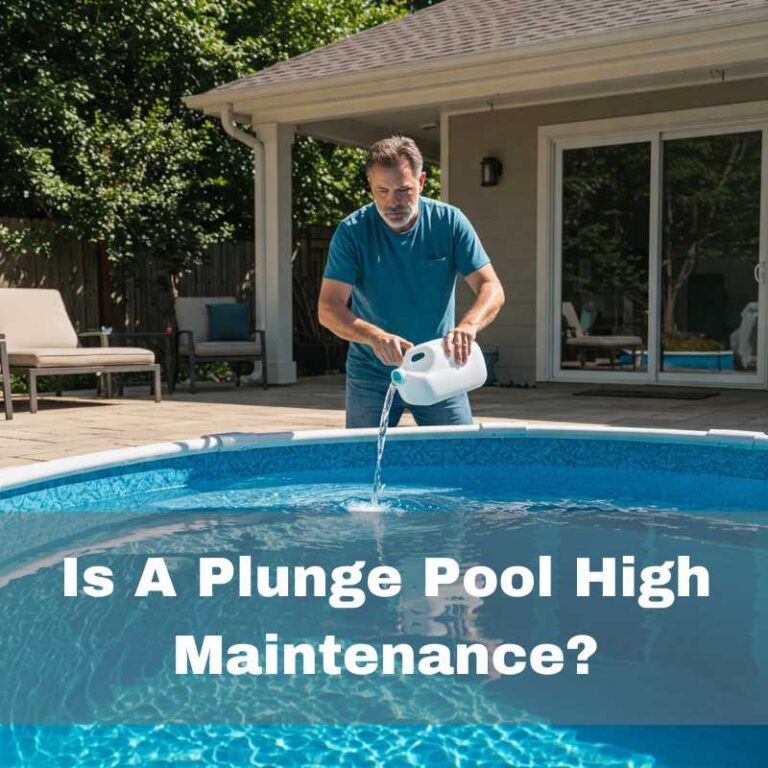

At Plunge Pools Newcastle, we help homeowners install and maintain high-quality fibreglass plunge pools across Newcastle. Our team understands local conditions, from coastal air to changing weather, so we know what works best to keep your pool in top shape with less effort.
In this guide, you will learn the exact fibreglass plunge pool maintenance routine to follow. We will cover daily, weekly, and monthly tasks, water chemistry, cleaning tools, and simple tips to reduce time and cost while keeping your pool looking like new.
What Is the Best Way to Maintain a Fibreglass Plunge Pool?
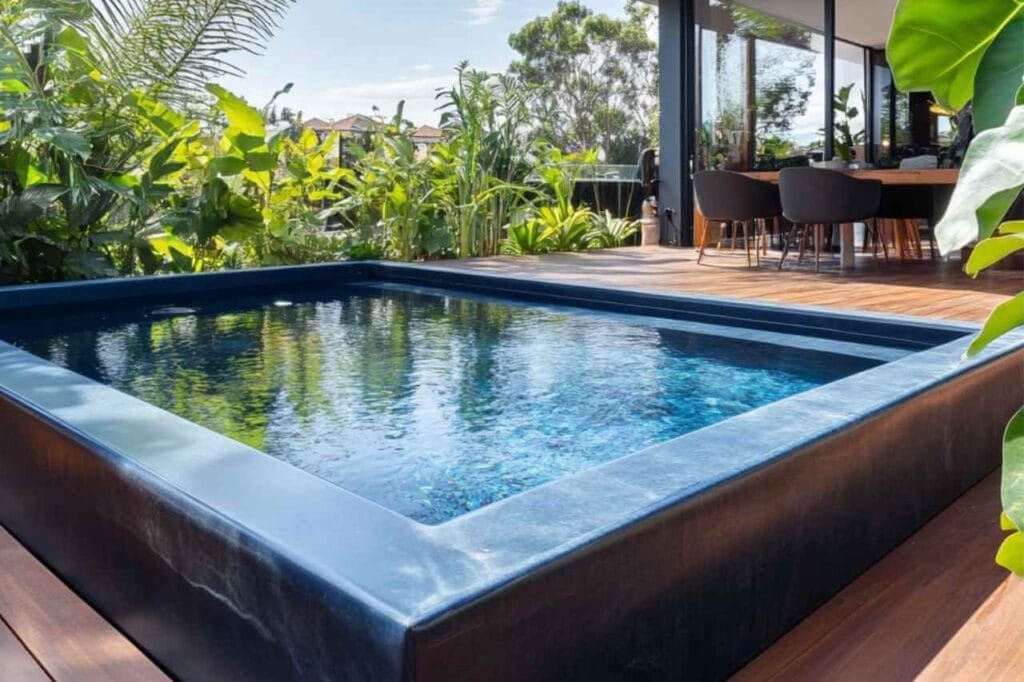
The best way to maintain a fibreglass plunge pool is to keep the water balanced, run the pump daily, clean debris often, and use non-abrasive tools to protect the gel coat surface.
Fibreglass plunge pool maintenance works best when you focus on three simple pillars:
- Cleaning removes leaves, dirt, and oils before they cause problems
- Circulation keeps water moving so the filter can do its job
- Chemistry stops algae, bacteria, and surface damage
Fibreglass pools are easier to maintain because they have a smooth, non-porous surface. This means:
- Less algae growth
- Fewer chemicals needed
- Less brushing compared to concrete pools
Simple rule:
Small, regular checks prevent big problems.
Fibreglass Pool Maintenance Routine (Daily, Weekly, Monthly Checklist)
You can maintain your pool in under 1 hour per week with this routine.
Daily (5–10 minutes)
- Skim leaves and debris
- Check the water level
- Look for cloudy water
Weekly (30–60 minutes)
- Brush walls and steps (soft brush)
- Vacuum pool (manual or robotic)
- Empty baskets
- Test and balance the water
Monthly
- Clean or backwash filter
- Check the pump and equipment
- Shock pool if needed
How to Maintain a Fibreglass Plunge Pool with Minimal Effort
You can maintain a fibreglass plunge pool with very little time if you use the right setup. The goal is simple. Automate what you can and keep routines consistent.
To make pool care easier:
- Use a robotic cleaner
- Set a pump timer
- Use a pool cover
- Test water once per week
Result:
- Less than 15 minutes of work per week
- More stable water
- Fewer problems
What Water Levels Should You Maintain in a Fibreglass Pool?
For proper fibreglass plunge pool maintenance, keep your water levels within these ranges:
- pH: 7.2–7.8
- Chlorine: 1–3 ppm
- Alkalinity: 80–120 ppm
- Calcium hardness: Low to moderate
These levels keep your pool safe, clear, and protect the fibreglass surface.
How Pool Water Chemistry Works in Fibreglass Pools
You don’t need to be an expert. Just remember:
- High pH → chlorine stops working
- Low chlorine → algae grows
- High calcium → white marks
Simple rule:
Test weekly and fix small changes early.
Why Fibreglass Pools Are Easier to Maintain Than Concrete Pools
Fibreglass plunge pools are easier to maintain because they have a smooth, non-porous surface. This reduces algae growth, lowers chemical use, and makes cleaning faster.
Quick Comparison
| Feature | Fibreglass Plunge Pool | Concrete Pool |
| Surface | Smooth | Porous |
| Algae Growth | Low | High |
| Cleaning | Easy, less brushing | Frequent scrubbing |
| Chemical Use | Lower | Higher |
| Maintenance Effort | Low | High |
What This Means in Real Life
With fibreglass:
- Dirt and algae do not stick easily
- You spend less time brushing
- Water stays balanced longer
- You use fewer chemicals
With concrete:
- The rough surface traps algae
- You need regular brushing
- More chemicals are required
- Maintenance takes more time
This is why many people choose fibreglass when comparing fibreglass vs concrete plunge pools.
Saltwater vs Chlorine Fibreglass Pools: Which Is Easier to Maintain?
Saltwater fibreglass pools are easier to maintain day to day because they produce their own chlorine. Chlorine pools are cheaper to set up but need more hands-on chemical management.
Key Differences
| Feature | Saltwater Pool | Chlorine Pool |
| Daily Maintenance | Low | Moderate |
| Chemical Handling | Minimal | Frequent |
| Water Feel | Softer on skin | Stronger chlorine feel |
| Setup Cost | Higher | Lower |
| Ongoing Effort | Lower | Higher |
Quick choice:
- Choose saltwater for less work
- Choose chlorine for a lower upfront cost
How Does Pool Circulation and Filtration Work?
Your pool pump and filter move water, remove debris, and spread chemicals evenly. This keeps your fibreglass plunge pool clean and safe.
Your pump and filter keep water clean by:
- Moving water
- Removing dirt
- Spreading chemicals
Best practice:
- Run pump 6–8 hours per day
- Run longer in summer
Simple rule:
Moving water stays clean.
What Cleaning Tools Are Safe for Fibreglass Pools?
Use soft, non-abrasive cleaning tools to protect the fibreglass gel coat. Avoid anything rough or harsh that can scratch the surface.
Safe Cleaning Tools
These tools are ideal for fibreglass plunge pool maintenance:
- Nylon brush
Soft and safe for walls, steps, and corners - Pool vacuum (manual or robotic)
Removes dirt and debris from the floor - Skimmer net
Clears leaves, bugs, and floating debris - Microfibre cloth or sponge
Good for cleaning the waterline
These tools keep your pool clean without damaging the surface.
Tools to Avoid
Avoid anything that can scratch or wear down the gel coat:
- Steel brushes
- Abrasive pads
- Harsh chemical cleaners
- Rough scrubbing tools
Damage to the surface can lead to staining, fading, and higher maintenance over time.
Manual vs Robotic Pool Cleaning: Which Is Better for Fibreglass Pools?
Robotic pool cleaners are better for fibreglass plunge pools if you want less work. Manual cleaning is cheaper but takes more time and effort.
Key Comparison
| Feature | Manual Cleaning | Robotic Cleaner |
| Cost | Lower upfront | Higher upfront |
| Effort | High | Low |
| Cleaning Time | Slower | Automatic |
| Coverage | Depends on the user | Consistent |
Choose robotic if:
- You want to save time
- You want consistent cleaning
How to Prevent Algae, Stains, and Cloudy Water
Algae, stains, and cloudy water are the most common pool problems. The good news is they are easy to prevent with simple, consistent care.
Prevent Algae
- Keep chlorine in range
- run pump daily
- brush weekly
Prevent Stains
- clean the waterline
- remove debris quickly
- Keep water balanced
Fix Cloudy Water
- test water
- clean filter
- run pump longer
- shock if needed
Early signs to watch:
- dull water
- slippery walls
- green patches
Why Fibreglass Pools Resist Algae
Fibreglass pools resist algae because they are smooth and non-porous.
This means:
- fewer places for algae to grow
- less buildup
- easier cleaning
Important:
They still need regular care.
What Are the Most Common Fibreglass Pool Maintenance Mistakes?
The most common fibreglass plunge pool maintenance mistakes are poor water balance, skipping regular cleaning, using abrasive tools, and ignoring small issues early.
Common Mistakes to Avoid
- Over-chlorinating the pool
Too much chlorine can damage the gel coat and cause fading. - Skipping regular cleaning
Debris builds up, leading to cloudy water and algae growth. - Ignoring water balance
Unbalanced water can cause stains, scaling, and equipment damage. - Using abrasive tools
Rough brushes or pads can scratch the fibreglass surface. - Poor drainage planning
Water buildup around the pool can affect the structure and stability.
Long-Term Damage These Mistakes Cause
If these issues are not fixed, they can lead to:
- Surface fading or staining
- Increased algae problems
- Higher chemical use
- Pump and filter wear
- Expensive repairs over time
How to Avoid These Problems
- Test and balance the water weekly
- Stick to a simple cleaning routine
- Use soft, non-abrasive tools
- Fix small issues early
What Happens If You Don’t Maintain a Fibreglass Pool Properly?
If you don’t maintain a fibreglass plunge pool properly, the water becomes cloudy, algae starts to grow, and over time, it can damage the surface and equipment.
Poor maintenance causes problems over time:
Week 1: Water looks dull
Week 2–3: Algae starts forming
1 month: Stains and cloudy water
Long-term: Damage and costly repairs
Most problems start small and get worse quickly.
How to Reduce Maintenance Costs
Reduce fibreglass plunge pool maintenance costs by staying consistent, preventing problems early, and using efficient equipment.
Most pool costs come from fixing problems, not maintaining them.
Save Money By:
- Using a pool cover
- Running your pump efficiently
- Avoiding overuse of chemicals
- Fixing small issues early
Simple rule:
Prevent problems instead of fixing them.
Is It Better to Maintain Your Pool Yourself or Hire a Professional?
It is better to maintain your fibreglass plunge pool yourself if you want to save money and your pool is simple. Hiring a professional is better if you want less effort and more reliable results.
DIY Pool Maintenance
Best for homeowners who want control and lower costs.
Pros:
- Lower ongoing cost
- Full control over maintenance
- Easy for small plunge pools
Cons:
- Takes time each week
- Requires basic knowledge of water chemistry
- Mistakes can lead to bigger problems
Professional Pool Maintenance
Best for busy homeowners or complex setups.
Pros:
- Saves time and effort
- Expert handling of chemicals and equipment
- More consistent results
Cons:
- Higher ongoing cost
- Less hands-on control
Decision Guide
- Choose DIY if:
- You have a small fibreglass plunge pool
- You are happy to spend a little time each week
- Choose professional service if:
- You are short on time
- You want peace of mind
- You prefer expert care
Seasonal Maintenance Tips for Australian Conditions
Fibreglass plunge pool maintenance changes with the seasons. Adjusting your routine helps keep your pool clear, safe, and cost-effective all year.
Summer Maintenance (High Use Season)
Summer is when your pool works the hardest.
- Increase pump run time (8+ hours if needed)
- Test water more often (2–3 times per week)
- Keep chlorine levels stable
- Clean debris regularly after heavy use
Hot weather and more swimmers increase demand on your pool.
Winter Maintenance (Low Use Season)
You can reduce effort, but do not stop completely.
- Reduce pump run time
- Use a pool cover to keep out debris
- Maintain basic water balance
- Clean occasionally to prevent buildup
Even when not in use, your pool still needs care.
Rain and Storm Management
Heavy rain can affect water balance.
- Test the water after rain
- Adjust pH and chlorine if needed
- Remove debris quickly
- Check for overflow or drainage issues
Evaporation in Newcastle Conditions
Warmer days and coastal conditions can cause water loss.
- Check water levels regularly
- Top up when needed
- Use a pool cover to reduce evaporation
How to Maintain a Fibreglass Pool in Hot vs Cold Climates
Fibreglass plunge pool maintenance changes depending on the temperature. Hot and cold climates affect water, chemicals, and equipment in different ways.
Hot Climate Maintenance
In warm conditions like Newcastle summers:
- Water evaporates faster
- Chlorine is used up more quickly
- Algae grows more easily
What to do:
- Test the water more often
- Increase chlorine levels slightly (within range)
- Run the pump longer
- Keep the pool covered when not in use
Cold Climate Maintenance
In cooler months:
- Pool use drops
- Chemical demand is lower
- Algae growth slows down
What to do:
- Reduce pump run time
- Maintain basic water balance
- Use a pool cover
- Clean occasionally to prevent buildup
Key Difference
- Hot weather = more activity, more maintenance
- Cold weather = less activity, basic upkeep
Best Equipment Upgrades for Easier Pool Maintenance
The best upgrades for fibreglass plunge pool maintenance are variable speed pumps, robotic cleaners, and smart monitoring systems. These reduce effort, save time, and lower running costs.
Top Upgrades to Consider
- Variable Speed Pump
Uses less energy and runs more efficiently than standard pumps
Helps maintain steady water circulation at a lower cost - Robotic Pool Cleaner
Cleans the pool floor and walls automatically
Reduces manual work and keeps the pool consistently clean - Smart Pool Monitoring System
Tracks water chemistry in real time
Alerts you when adjustments are needed
When Should You Call a Pool Professional?
Call a pool professional if your fibreglass plunge pool has persistent algae, unbalanced water that will not stabilise, equipment problems, or surface damage.
Signs You Need Expert Help
- Algae keeps coming back
Even after cleaning and shocking - Water won’t balance
pH, chlorine, or alkalinity keeps shifting - Pump or filter issues
Low pressure, strange noise, or poor circulation - Cloudy water that won’t clear
Even after cleaning and chemical adjustments - Surface or structural concerns
Stains, cracks, or unusual marks on the pool
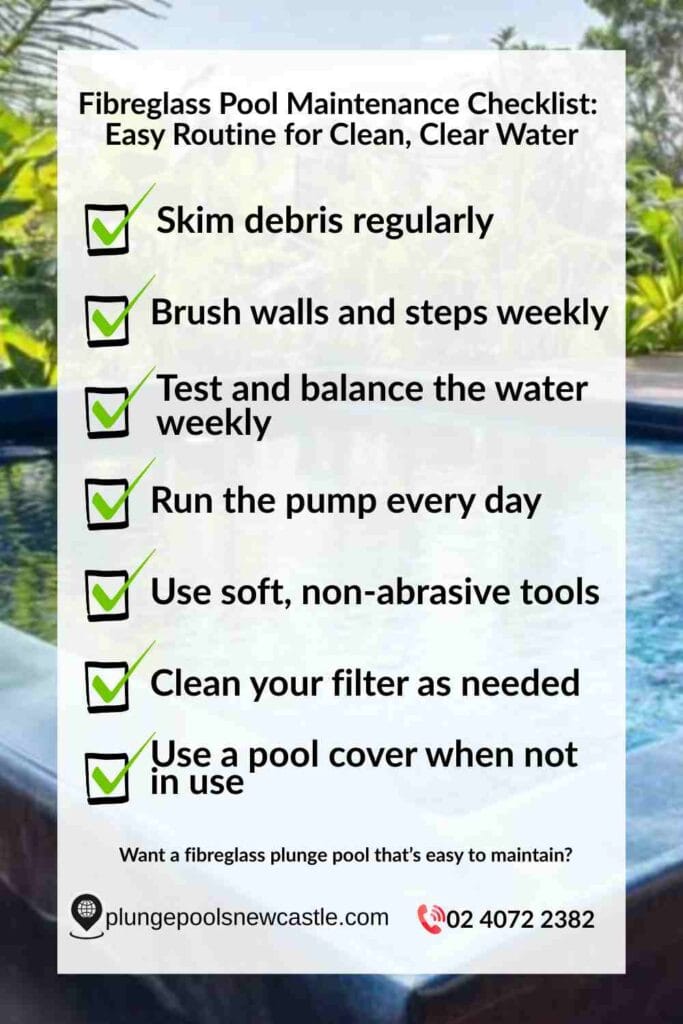
Final Checklist: Easy Fibreglass Pool Maintenance Routine
Use this simple checklist to keep your fibreglass plunge pool clean, clear, and low maintenance.
Conclusion
Maintaining a fibreglass plunge pool is simple when you focus on the basics. Keep your water balanced, run your pump daily, and clean your pool regularly. These small steps make a big difference over time.
If you want expert help or want to make maintenance even easier, reach out to Plunge Pools Newcastle. Our team can guide you, support your pool care, and help you get the most out of your fibreglass plunge pool.
FAQs
1. How often should I shock my fibreglass plunge pool?
You should shock your fibreglass plunge pool every 2–4 weeks or after heavy use. This removes contaminants and restores water clarity. It is also important after rain, pool parties, or if the water looks dull or slightly cloudy.
2. How much does fibreglass plunge pool maintenance cost per year in Newcastle?
Fibreglass plunge pool maintenance in Newcastle typically costs $800 to $1,500 per year. This includes chemicals, electricity, and basic upkeep. Costs stay low because fibreglass pools need fewer chemicals and less cleaning compared to concrete pools.
3. Why does my fibreglass pool still get algae even when I add chlorine?
Your fibreglass pool gets algae because chlorine is not working effectively. This usually happens when pH is unbalanced or circulation is poor. Even with chlorine, algae can grow if the water is not stable or moving properly.
4. Is a robotic pool cleaner worth it for a fibreglass plunge pool?
Yes, a robotic pool cleaner is worth it for a fibreglass plunge pool. It saves time, reduces manual work, and keeps the pool consistently clean. It is ideal for busy homeowners who want simple and low-effort maintenance.
5. Should I maintain my fibreglass plunge pool myself or hire a professional?
You should maintain your fibreglass plunge pool yourself if you want to save money and have time. Hire a professional if you want less effort and consistent results. Both options work, but consistency is the most important factor.